F1の医療車はなぜレーススタートを追走するのか
スタート直後の役割、1周目が特別に扱われる理由、セーフティカーとの違い、何も起きなかった場合の戻り方を整理します。

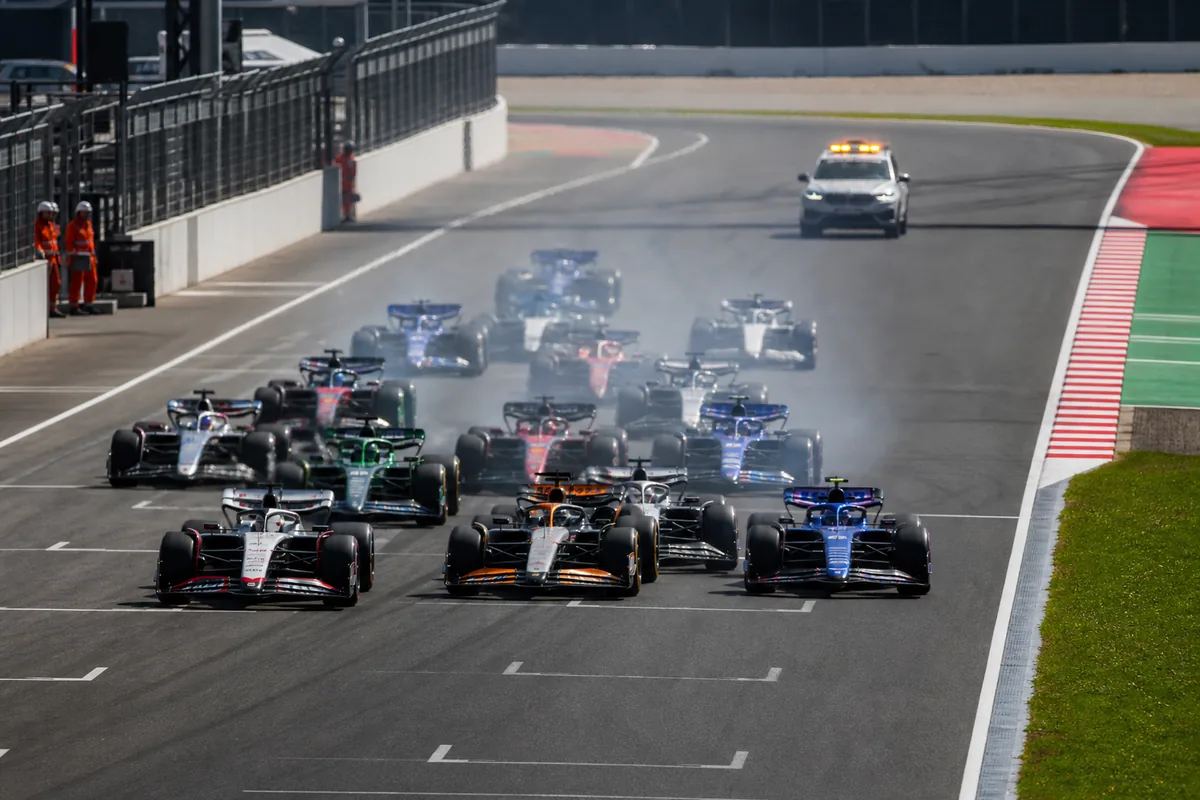
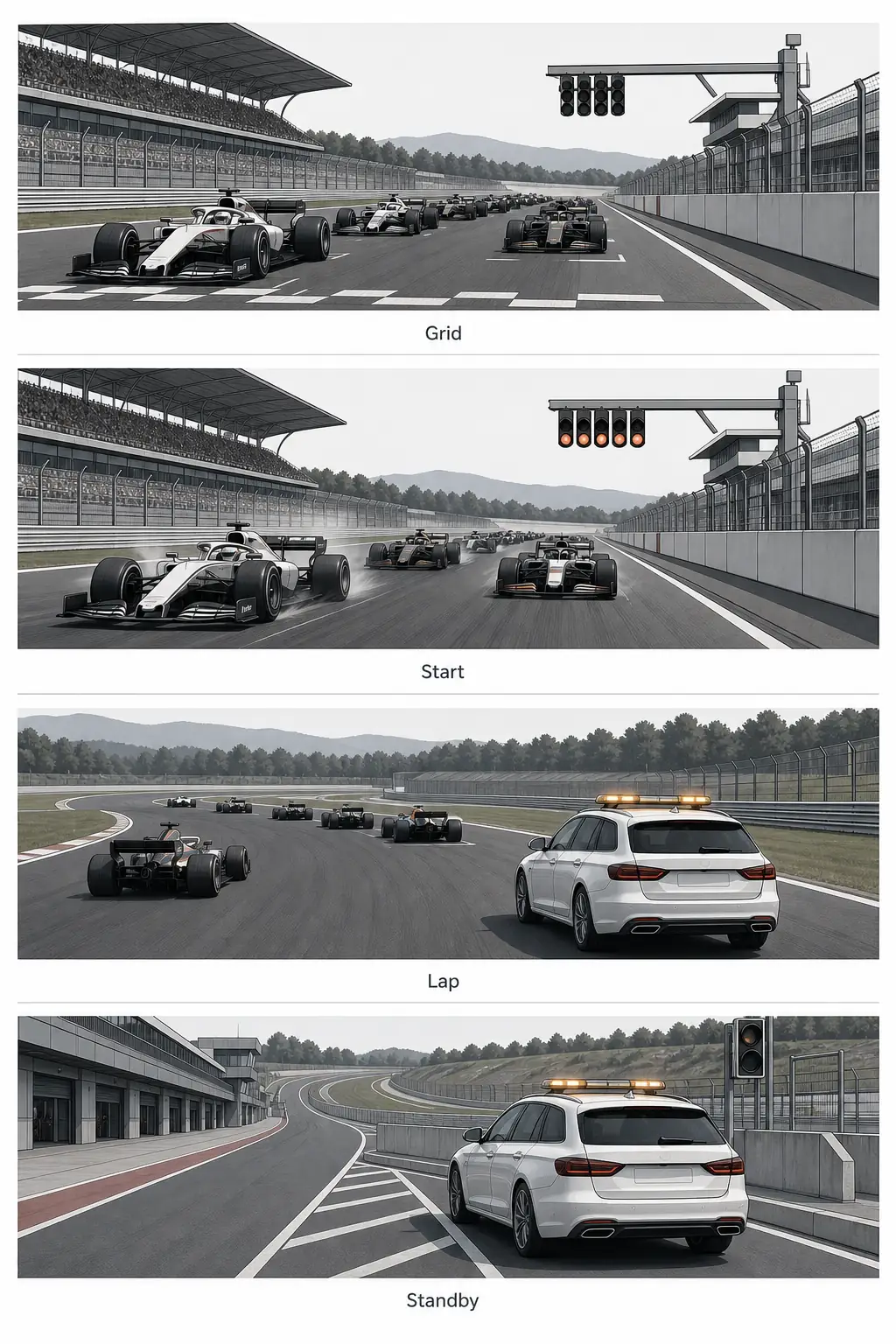
F1の医療車がスタートを追走する理由
通常のF1スタートで医療車が後方にいるのは演出ではありません。1周目は全車が密集し、同じブレーキングポイントへ向かい、ターン1で接触が起きやすい特別な時間帯だからです。
隊列が広がる前に大きな事故が起きた場合、数秒の差が重要になります。医療担当者と装備を載せた車がすでに走行していれば、ピットから静止状態で出るより早く現場へ近づけます。
これはF1スターティングライトやフォーメーションラップと同じスタート手順の一部ですが、目的はタイミングではなく安全です。
| Start phase | What is happening | Why the medical car matters |
|---|---|---|
| Grid ready | Cars are stationary, engines hot, and launch settings prepared. | The medical crew is positioned to leave immediately after the field. |
| Lights out | Cars accelerate together with minimal spacing. | The response car follows the field instead of waiting far behind. |
| Turn 1 and lap one | Traffic is dense and drivers contest track position. | A major incident can need rapid medical assessment. |
| After the opening lap | The field spreads and race control has clearer gaps. | The medical car can return to its standby role. |
スタート直後の流れ
スタート信号と医療対応計画を分けると理解しやすくなります。赤いライトはレース開始を決め、医療車の配置は1周目の事故対応時間を短くするためのものです。
医療車はF1マシンと競争せず、ペースを管理する車でもありません。安全な距離で隊列を追い、必要があればレースコントロールの指示で現場へ向かいます。
何もなければ走行ラインから離れ、待機位置へ戻ります。
医療車とセーフティカーの違い
医療車とセーフティカーは別の役割を持ちます。セーフティカーは危険時にレースペースを管理します。医療車は医療スタッフと対応装備を運びます。
スタート時に医療車が追走するのは、即時対応が必要になる可能性に備えるためです。セーフティカーはレースコントロールが競技を中立化するときに出ます。
覚え方は簡単です。セーフティカーは隊列管理、医療車は初動医療対応です。
| Vehicle | Primary job | At race start |
|---|---|---|
| Medical car | Carry trained medical responders and emergency equipment. | Follows the field during the opening phase for rapid response. |
| Safety car | Control the pace and bunch the field when racing is unsafe. | Waits for race-control deployment when conditions require it. |
| Course/official vehicles | Support marshals, track operations, or recovery. | Used only when race control and procedures require them. |
1周目が特別に扱われる理由
1周目は通常のレースラップとは違います。車間は狭く、タイヤとブレーキはまだ理想状態へ向かう途中で、各車が順位を争っています。
事故が起きる前提ではありません。リスクが集中しているという意味です。中団の小さな接触が連鎖することもあります。
ライトアウト直後は反応速度の見せ場であると同時に、安全手順が強く意識される場面です。
- Close spacing: the field enters the first braking zones before large gaps open.
- Cold or changing grip: tyres and track surface can make the first lap less predictable.
- High fuel load: cars are heavier than later in the race, which affects braking and traction.
- Position pressure: drivers have the strongest incentive to gain places before the race settles.
1周目の後に何が起こるか
クリーンなスタートなら、医療車はレースの後ろを走り続けません。通常はピットレーン付近や対応エリアの待機位置へ戻ります。
事故があれば、状況に応じて医療車の停止、セーフティカー、赤旗、マーシャルや回収車両の出動が判断されます。
医療車の1周目追走は備えであり、それ自体が異常を示すものではありません。
| Scenario | Likely medical car role | Viewer takeaway |
|---|---|---|
| Clean start | Return to standby after the opening phase. | The car was following as a precaution. |
| Minor incident | Race control assesses whether medical attendance is needed. | Not every contact requires medical car deployment. |
| Serious opening-lap crash | Medical responders can reach the scene faster. | The follow role is designed for this case. |
グランプリ中に見るポイント
ライトアウト後はまず先頭と中団の密集を見ます。クリーンなら医療車は後方やピット出口付近で短く映るだけかもしれません。
長く映る場合は推測せず、黄旗、セーフティカー、VSC、赤旗、公式メッセージを確認します。
反応の緊張感はF1 start timerで試し、早すぎる動きはジャンプスタート規則で確認できます。
F1医療車とスタートに関するFAQ
Sources and Scope
For official procedures, consult the current FIA Formula 1 regulations and event documents.
This is an independent fan explainer for F1 Start Timer and is not affiliated with Formula 1, FIA, the medical car supplier, or any racing team.
Last updated: July 9, 2026