Why Does the F1 Medical Car Follow the Race Start?
A practical guide to the medical car's opening-lap job, where it sits, why the first lap is different, and how it differs from the safety car.

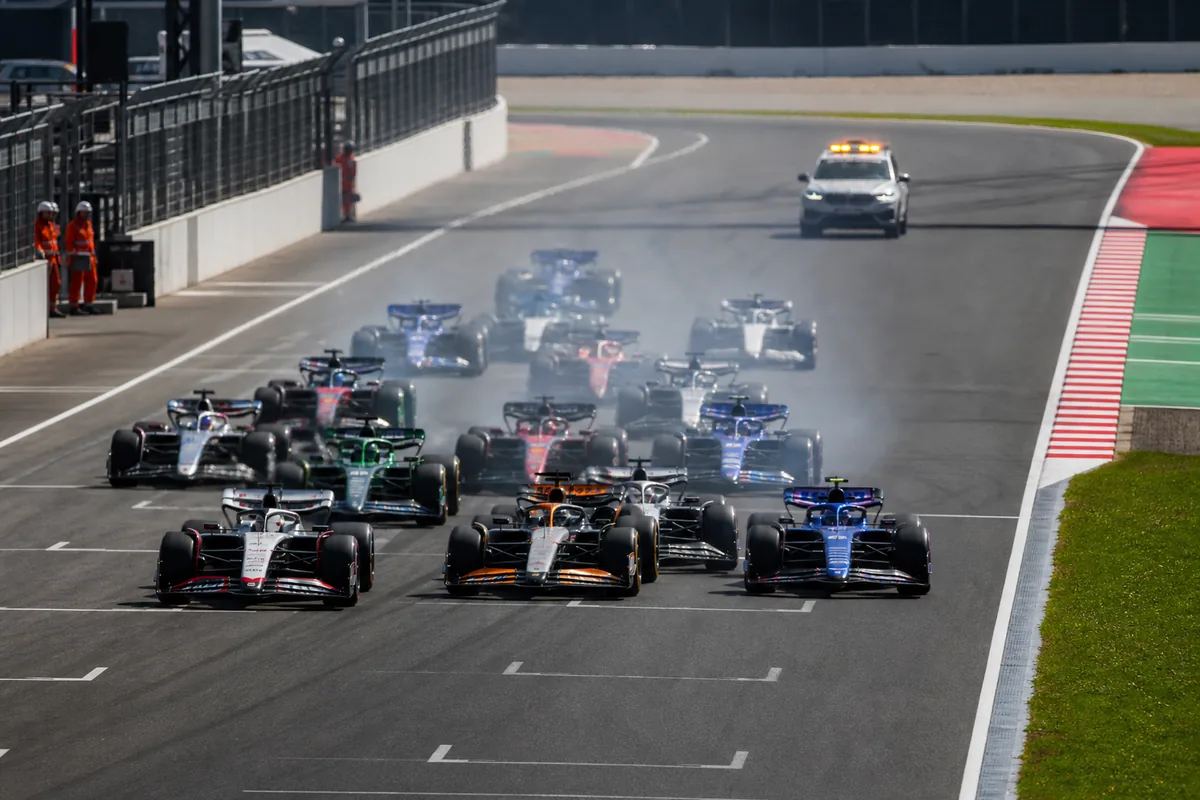
Why the F1 Medical Car Follows the Race Start
At a normal Formula 1 start, the medical car is not there for show. It leaves behind the field because the opening lap is compressed and unpredictable: twenty cars launch from the grid, fight for the same braking zones, and often arrive at Turn 1 in traffic that no later lap can match.
If a serious crash happens before the field has completed the first lap, seconds matter. Having the medical car already moving behind the cars can put the FIA medical delegate, rescue doctor, and medical equipment closer to the incident than a response that starts from a stationary pit-lane position.
That is why this topic belongs next to F1 starting lights and the formation lap: it is part of the same start procedure, but its purpose is safety rather than timing or reaction speed.
| Start phase | What is happening | Why the medical car matters |
|---|---|---|
| Grid ready | Cars are stationary, engines hot, and launch settings prepared. | The medical crew is positioned to leave immediately after the field. |
| Lights out | Cars accelerate together with minimal spacing. | The response car follows the field instead of waiting far behind. |
| Turn 1 and lap one | Traffic is dense and drivers contest track position. | A major incident can need rapid medical assessment. |
| After the opening lap | The field spreads and race control has clearer gaps. | The medical car can return to its standby role. |
The Start-Lap Sequence in Simple Terms
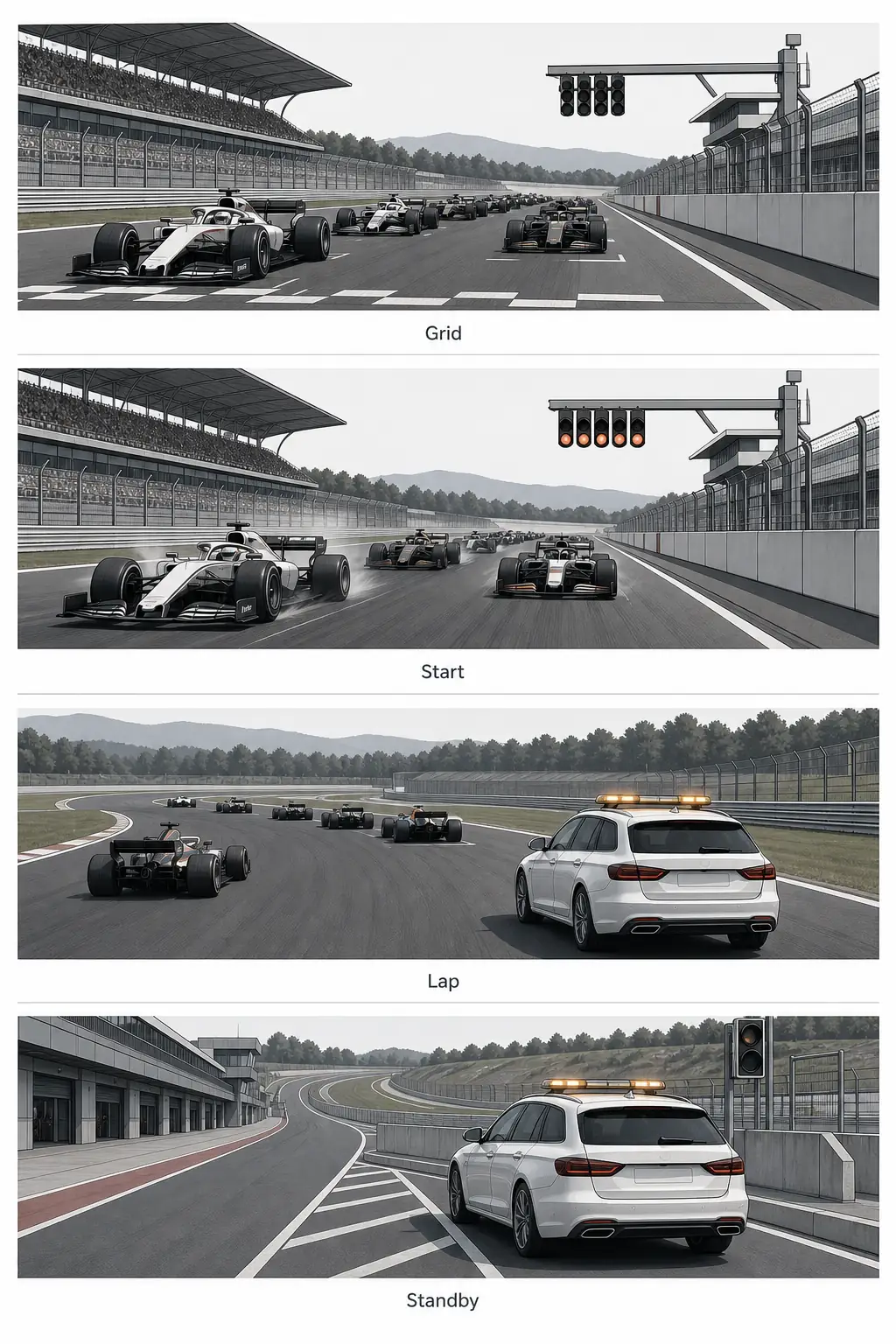
The sequence is easier to understand if you separate the start signal from the medical response plan. The red lights decide when the race starts. The medical car plan decides how quickly trained responders can reach an opening-lap crash.
The medical car does not race the Formula 1 cars and it does not control the pace. It follows at a safe distance, stays visible to race control, and is ready to stop if directed to an incident. If nothing happens, it leaves the racing line and resumes standby.
This simple timeline is also useful for viewers who ask whether the car at the back is a safety car. It is not. It is part of the first-lap emergency response setup.
Medical Car vs Safety Car: What Is the Difference?
The medical car and the safety car solve different problems. The safety car controls the pace of the race when the track is unsafe. The medical car carries specialized medical staff and response equipment. One manages the field; the other supports emergency care.
At the race start, the medical car follows because a medical response could be needed immediately. The safety car is not automatically deployed just because the race has begun. It appears when race control needs to neutralize the competition after an incident or unsafe condition.
Mixing these two cars up can make the start procedure seem confusing. A better rule is: safety car means race pace control; medical car means first response support.
| Vehicle | Primary job | At race start |
|---|---|---|
| Medical car | Carry trained medical responders and emergency equipment. | Follows the field during the opening phase for rapid response. |
| Safety car | Control the pace and bunch the field when racing is unsafe. | Waits for race-control deployment when conditions require it. |
| Course/official vehicles | Support marshals, track operations, or recovery. | Used only when race control and procedures require them. |
Why the First Lap Gets Special Attention
The first lap is different from a normal racing lap because the pack has not stretched out. Drivers are close, tyre temperatures are still building, brakes may be below the ideal window, and every driver is defending or attacking before the race rhythm settles.
That does not mean a crash is expected. It means the risk profile is concentrated. A small contact in the middle of the pack can trigger a chain reaction, and cars can end up stopped or damaged in places where a fast medical assessment is valuable.
For the same reason, viewers should treat the first seconds after lights out as a safety-critical procedure, not just a reaction-time spectacle. The best start is clean, legal, and controlled.
- Close spacing: the field enters the first braking zones before large gaps open.
- Cold or changing grip: tyres and track surface can make the first lap less predictable.
- High fuel load: cars are heavier than later in the race, which affects braking and traction.
- Position pressure: drivers have the strongest incentive to gain places before the race settles.
What Happens After the Medical Car Follows Lap One?
If the start is clean, the medical car does not continue circulating behind the race. It returns to its assigned standby position, usually around the pit lane or medical-response area, so it can be dispatched if race control calls for it later.
If there is an incident, race control can direct the response according to the situation. The medical car may stop near the scene, a safety car or red flag may be required, and marshals or recovery crews may also become involved. The exact response depends on the location and severity of the incident.
This is why the car's opening-lap run is best understood as preparedness. It is not part of the race competition, and it is not a signal that something is wrong.
| Scenario | Likely medical car role | Viewer takeaway |
|---|---|---|
| Clean start | Return to standby after the opening phase. | The car was following as a precaution. |
| Minor incident | Race control assesses whether medical attendance is needed. | Not every contact requires medical car deployment. |
| Serious opening-lap crash | Medical responders can reach the scene faster. | The follow role is designed for this case. |
How to Watch It During a Grand Prix Start
When the lights go out, focus first on the front and midfield packs. If the start is clean, you may briefly see the medical car at the back or near the pit exit as it completes its response-positioning job.
If broadcast cameras show the medical car for longer than usual, listen for race-control context rather than guessing. The important signals are yellow flags, safety car, virtual safety car, red flag, or official timing messages.
For practice and timing context, use the homepage F1 start timer to understand lights-out reaction pressure, then read the jump start rules guide to separate legal launches from early movement.
F1 Medical Car Race Start FAQ
Sources and Scope
This guide explains the viewer-facing start procedure and safety role. For official wording, consult the current FIA Formula 1 regulations and event documents.
The article is an independent motorsport explainer for fans using the F1 Start Timer reaction tool. It is not affiliated with Formula 1, FIA, the medical car supplier, or any racing team.
Last updated: July 9, 2026