What Is the Formation Lap in F1? Start Procedure Explained
A practical guide to the lap before lights out: what drivers do, why cars weave, how it differs from the race start, and what extra formation laps mean.

What Is a Formation Lap in F1?
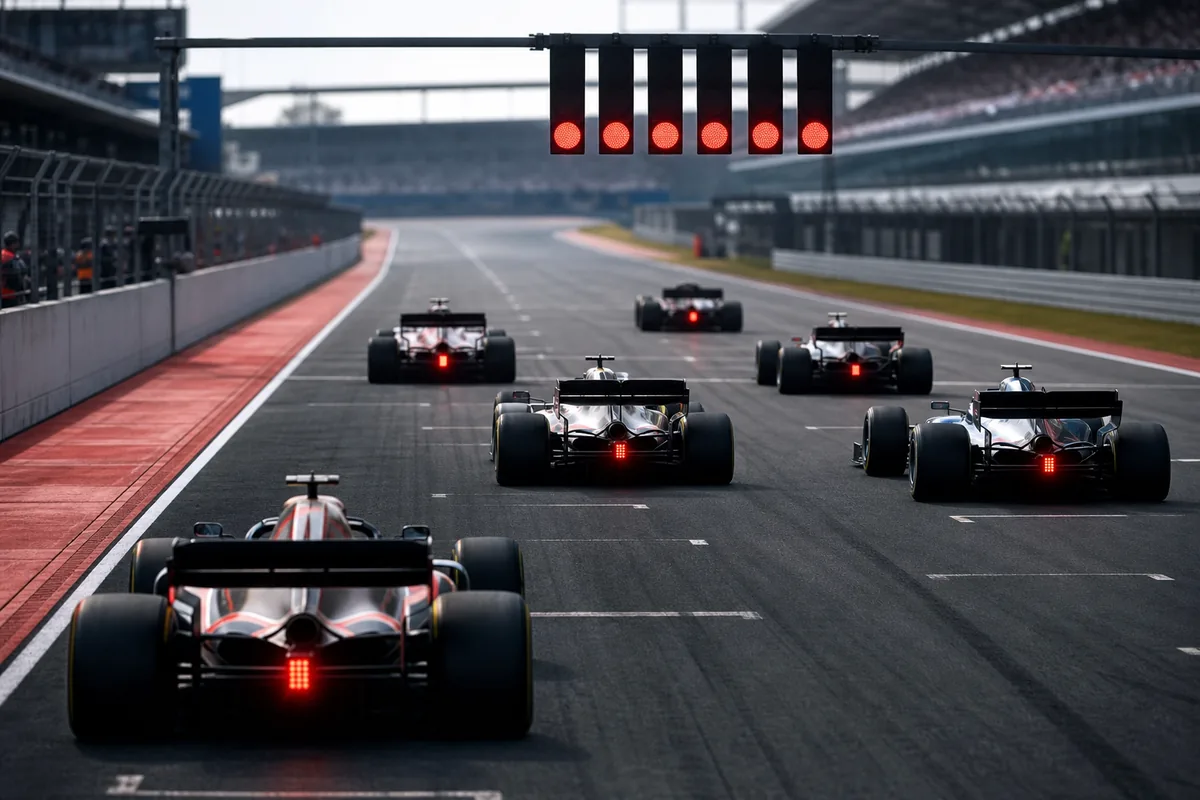
A formation lap in F1 is the slow lap before the race start. Cars leave the grid, drive around the circuit, warm tires and brakes, check basic systems, then line up again in their grid boxes for the actual start sequence.
The formation lap is not lap one of the race in normal conditions. It is the final preparation lap before the five red starting lights and the lights-out signal. That distinction matters because fans often hear commentators mention tire temperature, clutch bite point, brake feel, or a car stopping on the grid during this lap.
For a viewer, the simple answer is: the formation lap is where the field gets ready. The race begins only after the cars return to the grid and the start lights go out.
| Question | Short answer | Why it matters |
|---|---|---|
| Does the formation lap count as the race? | Usually no. | The race start normally comes after the cars return to the grid. |
| Can drivers overtake? | Only in limited procedural cases. | The field is expected to maintain order and return to the correct grid position. |
| Why do drivers weave? | To manage tire temperature and feel. | Warm tires and brakes help the launch and first-corner control. |
| What happens after it? | Cars stop in their boxes and wait for the lights. | The actual reaction moment is still the lights-out signal. |
Formation Lap Sequence Before Lights Out
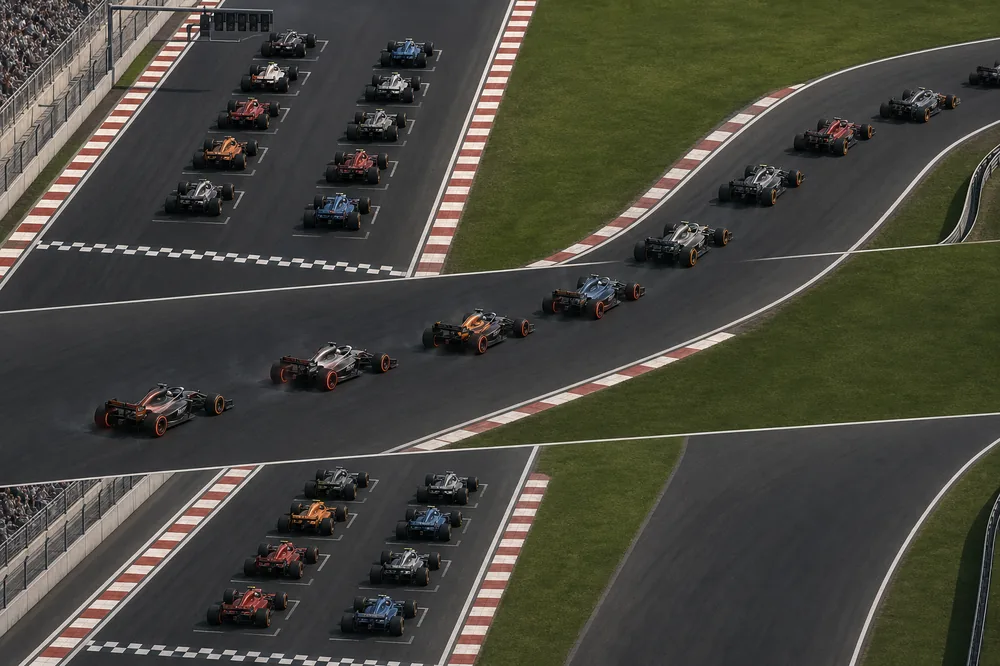
The pre-start flow is easier to understand when you separate the preparation lap from the start signal. The formation lap moves the cars from parked grid positions into a controlled lap and back into the grid. The starting lights then decide when the race is released.
A normal start follows this broad pattern. Exact procedures can change by series, season, or race direction instruction, so official regulations always take priority.
| Stage | What happens | Fan cue |
|---|---|---|
| Grid is cleared | Cars are lined up, crew leave the grid, and drivers prepare the car for launch. | Commentators usually mention tire choice, clutch settings, or track temperature. |
| Formation lap begins | The field pulls away in grid order and follows the leader around the circuit. | You may see weaving, brake warming, and cautious spacing. |
| Cars return to grid | Each driver stops in the assigned grid box and waits for the starter. | The important cue shifts from movement to the start lights. |
| Red lights and lights out | The red lights illuminate and then go out after a variable pause. | This is the reaction moment, not the formation lap itself. |
Why the Formation Lap Matters
The formation lap looks slow, but it is an active part of race preparation. Drivers are trying to arrive at the grid with tires, brakes, engine mode, clutch feel, and focus all in the right window.
That is why a messy formation lap can affect the first seconds of the race. A driver who loses temperature, stops out of position, or reports a problem can trigger delays or extra procedures before the start.
- Tire temperature: weaving and acceleration can help keep the tires closer to the desired operating window.
- Brake feel: drivers need predictable braking before turn one, especially on a heavy fuel load.
- Launch preparation: the driver checks clutch bite, engine settings, and steering wheel procedures before stopping again.
- Track awareness: standing water, debris, wind, or grip changes can be noticed before the start.
Formation Lap vs Reconnaissance Lap vs Race Start
Several similar terms appear around the start, and they are easy to mix up. The most useful boundary is whether the car is preparing before the official start, circulating because the start was delayed, or already racing.
Use the table below when a commentator says formation lap, reconnaissance lap, parade lap, extra formation lap, or lights out.
| Term | When it happens | Simple meaning |
|---|---|---|
| Formation lap | Immediately before a standing start. | The field warms up and returns to the grid. |
| Reconnaissance lap | Before taking the grid, depending on event procedure. | A lap from pit exit to the grid before final start preparations. |
| Parade lap | Often used casually, but not always the precise F1 rule term. | A slow pre-start lap for the field, often meaning the formation lap to casual fans. |
| Extra formation lap | When the start is aborted or delayed after the field was ready. | Cars may complete another lap before trying the start again. |
| Lap one | After the valid start signal. | The race is live and normal racing rules apply. |
Extra Formation Laps and Aborted Starts
If a car has a problem on the grid, the start may be delayed or aborted. Fans might then see another lap before the field tries again. This is why “extra formation lap” often appears in live commentary after a driver waves, stalls, or cannot start normally.
The important point for searchers is that an extra formation lap is a procedure reset, not a normal racing lap. Race control instructions and the current sporting regulations decide how the start is handled and whether race distance is affected.
An extra formation lap normally follows a delayed or aborted start. The field completes another controlled lap while officials reset the procedure and the race distance may be reduced under the applicable rules. It is not a restart of competitive racing, and drivers still follow the prescribed order and race-control instructions.
| Situation | What fans may see | How to interpret it |
|---|---|---|
| Car signals a problem on the grid | Yellow flags, delayed lights, mechanics or marshals attention. | The normal start sequence may be stopped. |
| Aborted start message | Cars leave for another controlled lap. | Expect another formation lap and a reset of the grid. |
| Driver starts from pit lane | A car may be missing from its grid slot. | The field still follows race direction instructions. |
| Lights go out normally | Cars launch from the grid. | The formation lap is over and the race start has happened. |
How Fans Can Use the Formation Lap for Start Practice
For start practice, the formation lap is a useful mental reset. Real drivers use it to prepare the car and focus before the lights. Fans using an online F1 Start Timer can copy the same idea by separating preparation from reaction.
Before you run a lights-out test, set your hand position, clear distractions, and decide that early clicks do not count. Then wait for the signal instead of trying to predict it. That is closer to the formation-lap mindset than simply chasing a fastest click.
Once the race is under way, a different signal manages traffic between cars on different laps. Read the F1 blue flag guide to understand when a backmarker must let a leader pass.
- Prepare first: set the same device, hand position, and focus routine before each attempt.
- Wait second: treat the red lights as the final cue, not a rhythm to memorize.
- React cleanly: discard attempts where you anticipated lights out.
- Review averages: compare five to ten starts instead of one lucky result.
F1 Formation Lap FAQ
Sources and Scope
This guide explains the viewer-facing formation lap and start sequence for F1 fans. For official wording, use the current FIA Formula 1 regulations.
For fan-facing start and race context, Formula 1’s official site is the best source for event schedules and session explanations. This site is an independent practice resource and is not affiliated with Formula 1, FIA, or any racing team.
Last updated: June 23, 2026