F1 New Start Procedure 2026: What Changed Before Lights Out?
A practical guide to the five-second blue pre-start phase, the unchanged red-light start signal, aborted starts, and what fans should watch when the grid gets ready.

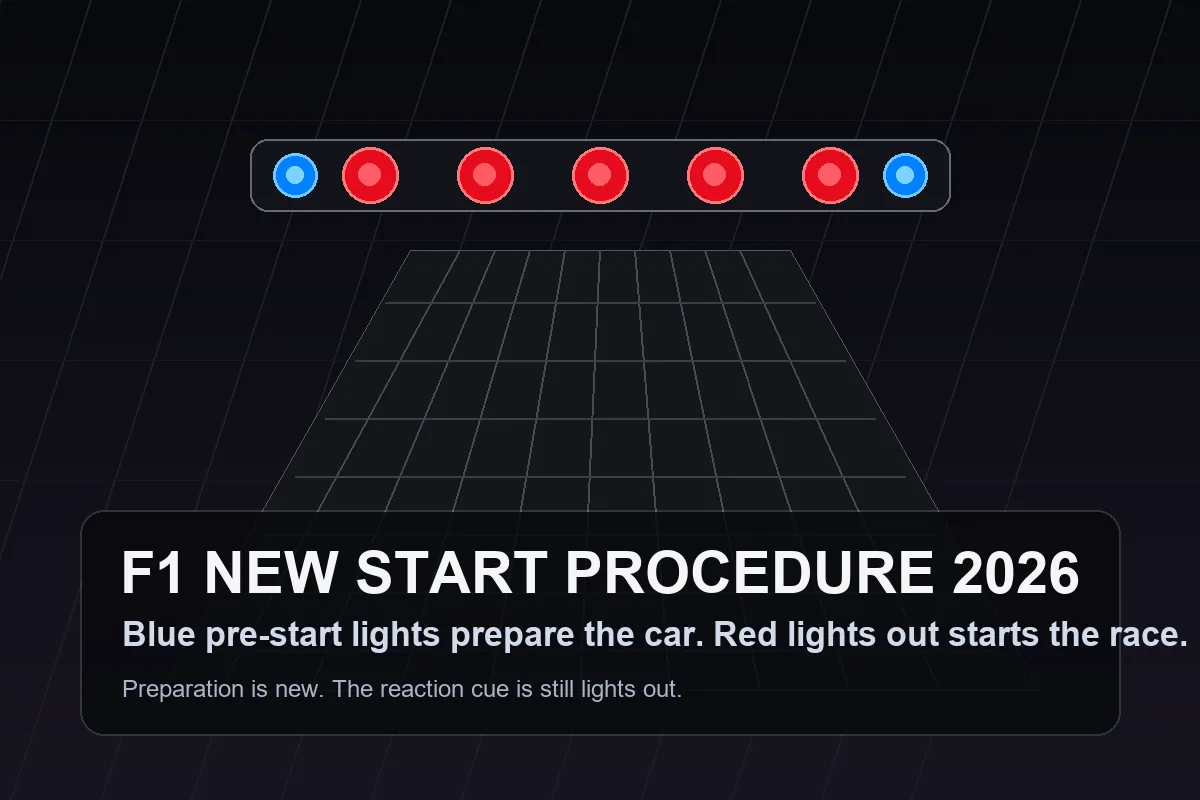
What Changed in the F1 New Start Procedure for 2026?
The important change is a new pre-start phase before the traditional red starting lights. Once the cars are in position, the grid can show a blue-light signal for a short fixed window. That gives drivers time to settle the new 2026 power-unit launch condition before the normal start-light sequence begins.
This does not turn the start into a predictable countdown. It adds a preparation signal before the start sequence, then the familiar five red lights still control the race release. Fans should treat blue as prepare and red lights out as go.
The change exists because the 2026 technical rules alter the power-unit behavior. With different hybrid and turbo characteristics, teams and drivers need a clearer pre-start cue so the car is ready when the final signal arrives. That preparation matters, but the driver still has to react cleanly to lights out.
The simple version
Blue lights help drivers prepare; red lights going out still start the race.
2026 F1 Start Procedure: Blue Lights and Red Lights Step by Step
The new sequence is easiest to understand if you separate preparation from reaction. A driver does not launch when the blue signal appears. The blue phase gives the grid a shared preparation window, then the red-light sequence creates the real reaction moment.
That distinction is useful for viewers because a 2026 start can look longer than the old version. The first visible phase is not a false start or a delay by itself; it is a designed pre-start signal.
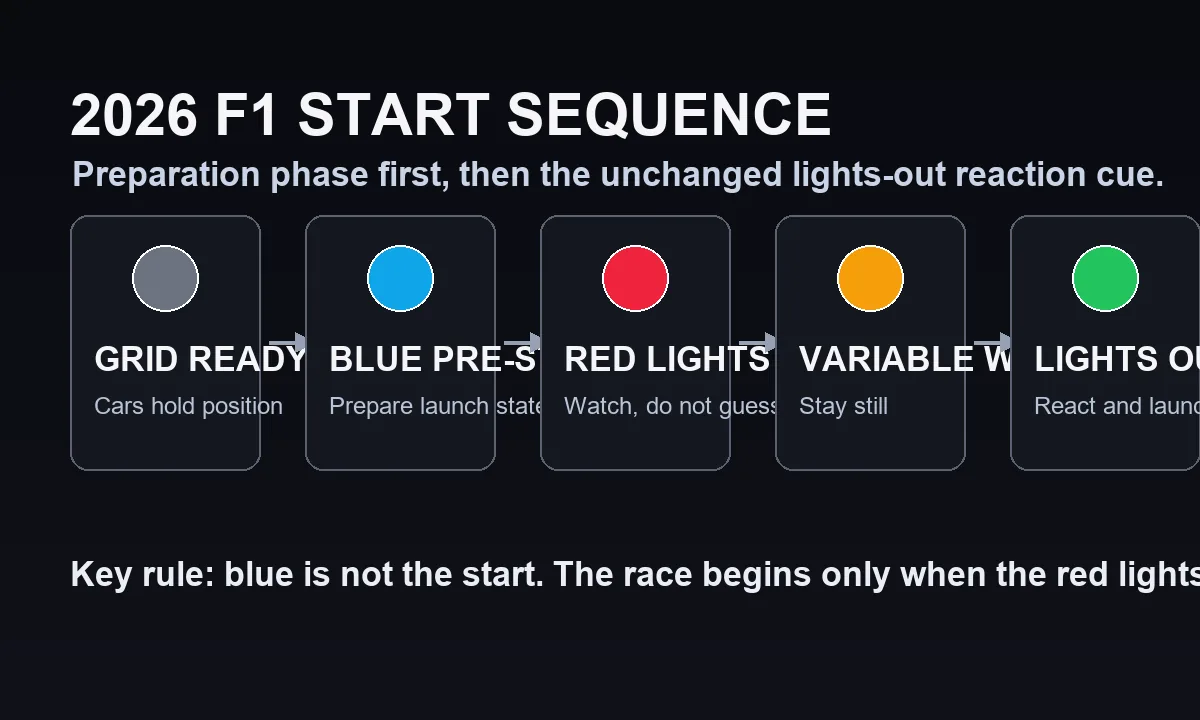
| Stage | What happens | Driver focus |
|---|---|---|
| Cars stop on the grid | Drivers hold position in their grid boxes after the formation lap. | Keep the car stationary and prepare the launch settings. |
| Blue pre-start phase | The grid receives a visible preparation window before the red-light sequence. | Build and hold the correct launch state without creeping forward. |
| Five red lights | The familiar red lights illuminate before the start. | Watch the signal, manage tension, and avoid predicting the exact moment. |
| Variable wait | The final interval prevents a simple rhythm-based launch. | React to the cue instead of counting down. |
| Lights out | All red lights go out and the race is released. | Launch cleanly and avoid a delayed or jumped start. |
How Aborted Starts and Suspended Procedures Fit In
A new pre-start signal does not remove the Race Director's ability to stop the process. If a car stalls, a driver signals a problem, track conditions change, or the start cannot safely continue, the procedure can be aborted, delayed, or suspended according to the current FIA sporting rules.
For fans, the key is to avoid reading every unusual grid signal as the race start. Start procedures include several control messages and safety states. The only fan-facing moment that releases the field is still the final valid start signal.
In an online reaction test, the equivalent lesson is simple: if the cue is not valid, restart the attempt. A clean result depends on reacting to the correct signal, not moving early because the build-up feels predictable.
- Aborted start: the start is stopped after a safety or procedural issue, and the field follows the official restart instructions.
- Suspended procedure: the scheduled start process is paused before the field can be released.
- False start: a car moves before the valid start signal, which can lead to penalties.
- Clean launch: the driver holds position through the preparation phase and reacts only after the red lights go out.
Why the F1 Blue Lights Matter in 2026
The blue phase matters because it separates technical preparation from human reaction. The 2026 cars place different demands on launch management, so the pre-start cue gives drivers a defined moment to prepare the power-unit state before they face the normal red-light start.
That does not make the start easier in the way a fixed countdown would. It can actually add another mental layer: prepare during blue, stay still during red, and launch only when red disappears. The driver has more to manage before the same reaction cue.
| Question | Answer | Practice note |
|---|---|---|
| Do blue lights start the race? | No. They are a preparation cue before the standard red-light start sequence. | Do not click or launch on blue. |
| Did the red lights disappear? | No. The familiar red lights remain the final visible start signal. | Train your reaction on lights out. |
| Is the final wait still uncertain? | Yes. The final lights-out moment still should not be treated as a memorized rhythm. | Compare clean averages, not lucky guesses. |
Blue, Red, and Lights Out Timing in the 2026 Start Sequence
The easiest way to read the new procedure is to separate three ideas: preparation, start sequence, and release. The blue signal belongs to preparation. The red lights belong to the start sequence. The race release still happens only at lights out.
That distinction also protects reaction practice from becoming confusing. If you are using the homepage timer, you are training the final red-lights-out reaction, not the technical blue preparation window.
| Signal | Meaning | Viewer note |
|---|---|---|
| Blue pre-start signal | A preparation phase before the standard start sequence. | Do not treat it as the race start. |
| Five red lights | The familiar visual build-up before release. | Tension rises, but the field is still held. |
| Lights out | The red lights go out and the race is released. | This is the reaction moment to watch or practice. |
What Fans Should Watch During a 2026 F1 Start
A 2026 start rewards careful watching. You can read more of the drama before Turn 1 if you know which phase you are seeing. The blue phase is about preparation, the red phase is about tension, and lights out is the reaction moment.
The first few races with the new process may create more discussion because fans, commentators, and teams are all watching how drivers adapt. A slow launch may not be a poor reaction alone; it can also come from power-unit preparation, grip, clutch release, or avoiding wheelspin.
- Look for the blue preparation phase. It signals that the grid is moving into launch preparation, not that the race has started.
- Watch the red lights separately. The red-light build remains the familiar visual countdown.
- Judge the launch after lights out. The meaningful comparison starts when the red lights disappear.
- Expect car-to-car differences. Reaction time, torque delivery, clutch control, grip, and track position can all change the getaway.
How to Practice the Final Lights-Out Cue
This article explains the full 2026 procedure, but a browser tool is best for the final reaction skill: wait, do not guess, and respond only when the valid start cue appears. That is why the homepage timer still focuses on the red lights-out moment rather than trying to simulate every technical part of a Grand Prix launch.
Use several attempts, remove any jump starts, and compare your average. That keeps your practice aligned with the same rule drivers face: preparation matters, but the start is only valid after the signal.
F1 New Start Procedure FAQ
Sources and Scope
This guide summarizes the viewer-facing start procedure and links it to reaction practice. For official wording, check the current FIA Formula One regulations.
Formula1.com's race-start explainer is useful background on five red lights, the variable wait, driver launch skill, and why starts are so decisive. This article focuses on the 2026 pre-start change and does not replace official race-control messages.
This site is an independent fan-made practice resource and is not affiliated with Formula 1, FIA, or any racing team.
Last updated: July 4, 2026