F1 Tyre Compounds Explained: Soft, Medium, Hard and Wet Tyres
A practical guide to the rubber choices behind F1 grip, tyre life, pit-stop timing and race strategy.

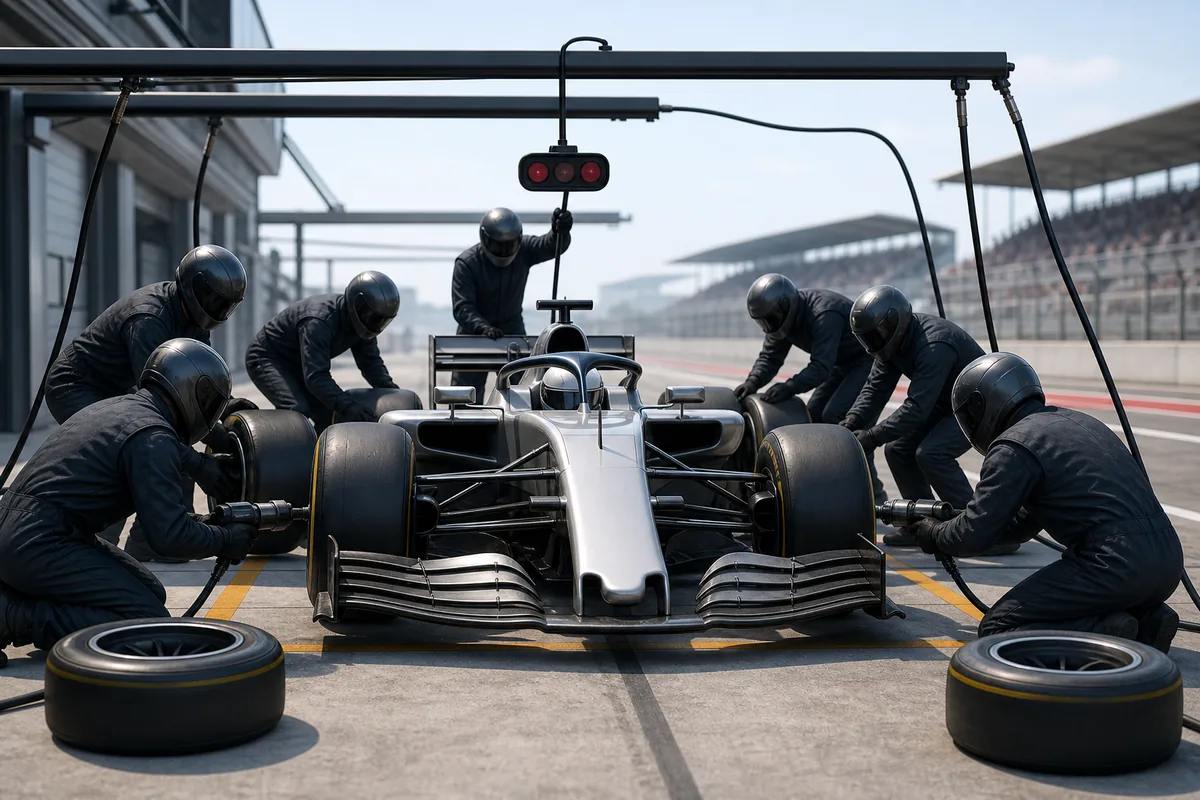
What Does an F1 Tyre Compound Change?
An F1 tyre compound is a rubber specification built around grip, temperature response and wear. It affects how quickly the tyre reaches its working range, how much traction it produces and how long the driver can keep a consistent pace.
That is why a soft tyre can be quicker over one qualifying lap but not over an entire stint. If it overheats or degrades, the initial grip advantage disappears. A hard tyre can look slow at first and become the better race option when tyre life matters more.
The key idea
Soft, medium and hard are relative choices within the dry-tyre range. They are not universal speed labels: a compound only makes sense alongside the circuit, weather, fuel load and expected stint length.
Soft, Medium and Hard F1 Slicks
Dry-weather F1 slicks have no grooves across the main contact surface. The softer option is made to generate more mechanical grip and reach temperature readily, while the harder option is designed to tolerate more laps and heavy loading. The middle choice bridges those needs.
Red, yellow and white sidewalls identify the selected soft, medium and hard tyres during a broadcast. They show the relative position of that weekend's dry compounds, not a permanent promise that every red tyre has the same specification at every circuit. Current event information remains the right reference.
| Tyre choice | Typical role | Main trade-off |
|---|---|---|
| Soft slick | Fast warm-up and strong short-run grip | More vulnerable to overheating and performance drop-off |
| Medium slick | Balanced race and qualifying option | Usually gives away some peak grip or life to the extremes |
| Hard slick | Longer stints and heavy-load circuits | Can be slower to warm and less forgiving early in a stint |
| Dry slick range | Relative soft-to-hard choices for a dry track | The same color should be read with the current event nomination |
Dry Tyres vs Intermediate and Full Wet Tyres
Intermediate and full wet tyres have tread grooves that move water away from the contact patch. A slick can be excellent on dry asphalt, but standing water or a wet racing line can make it ineffective.
Intermediates suit a damp or changing circuit. Full wets suit heavier rain and more water. Because a track can dry quickly, the crossover decision may matter more than the nominal fastest tyre: pitting one lap too early or too late can cost track position. Visibility, aquaplaning and race-control decisions still matter.
| Track condition | Likely tyre family | What changes for the driver |
|---|---|---|
| Dry racing line | Slick soft, medium or hard | The focus is grip, warm-up, degradation and stint length. |
| Damp or drying track | Intermediate | The driver searches for a line with enough temperature and not too much standing water. |
| Heavy rain and water | Full wet | Water evacuation and visibility become more important than dry-lap pace. |
| Rapid crossover | Pit timing decision | The fastest tyre can change corner by corner as the surface evolves. |
How Teams Choose an F1 Tyre Compound
Teams combine simulations, practice data, weather forecasts, track evolution and rival behavior. A tyre that looks excellent over one lap may be difficult to manage with a heavy fuel load, while a conservative tyre can become valuable after a safety car or red flag changes the pit window.
The circuit matters too. Smooth asphalt may struggle to energize a hard tyre, while an abrasive or high-load track can punish soft choices. Track position then turns the data into strategy: a driver in clean air may extend a stint, while a driver behind another car may use fresh rubber for an undercut.
- Grip versus life. A softer tyre can attack immediately, while a harder tyre may keep a stable pace for longer.
- Warm-up window. A compound that is durable but below temperature can be difficult to use during a cold out-lap or restart.
- Degradation shape. Teams watch whether pace fades gradually or falls sharply after overheating or sliding.
- Undercut potential. Fresh tyres can create a short burst of lap time before a rival responds, if traffic does not erase the gain.
- Overcut potential. Staying out can work when the tyres remain healthy and clear air is faster than a congested rejoin.
- Weather and neutralization. Rain, a safety car or a red flag can make a planned compound sequence irrelevant within a few laps.
How to Read Tyre Strategy on the Timing Screen
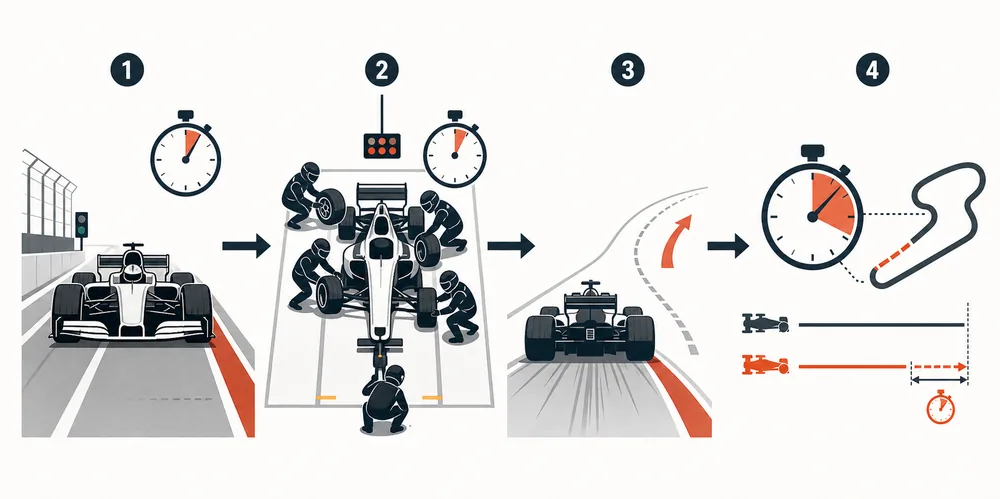
When a broadcast shows a tyre change, note the compound and lap number. Then check the gap to nearby cars, pit-lane time loss and whether the driver rejoined in traffic.
A soft-to-medium change may protect against degradation. A medium-to-hard change may signal a longer final stint, although a safety car can change the meaning. Staying out may be an overcut, a defense of track position or a wait for weather.
Do not compare drivers only by color: fuel load, car balance, traffic and tyre age differ. Ask which car is extracting the most pace from its current compound in these conditions.
| Broadcast signal | Possible meaning | What to watch next |
|---|---|---|
| Soft at the start | A launch or short first stint may be the priority | Whether the driver attacks early or saves the tyre. |
| Long medium stint | The team may be protecting flexibility or waiting for an event | Lap-time loss, traffic and the likely pit window. |
| Hard tyre late | A one-stop or long final run may be planned | Warm-up, pressure from behind and remaining tyre life. |
| Intermediate swap | The track has crossed the damp-to-wet decision point | Drying sectors and whether slicks become viable again. |
| Staying out | Track position or a weather window may be valuable | Whether clear air offsets the older tyre. |
A Simple Way to Understand an F1 Tyre Decision
To follow tyre choices, begin with the surface: dry, damp, drying or carrying standing water. Then check tyre age and pace. A fresh tyre may be faster because it is fresh, not because its compound is best for the whole race.
Connect the tyre to the situation: clean air, defense, chase, pit-stop gap, safety car or weather crossover. Finally, judge the intended result. A tyre that loses a few tenths per lap but avoids an extra stop may still be the correct race tyre.
- Check the surface. Classify it as dry, damp, drying or wet before comparing colors.
- Check tyre age. A worn soft and a new soft are different tools.
- Check traffic. A lap-time gain is less useful if the driver rejoins behind slower cars.
- Check the event. Safety cars, red flags and rain can change pit-stop value.
- Check the outcome. Ask whether the choice improved position or protected the finish plan.
F1 Tyre Compounds FAQ
Sources and update note
This is a viewer-friendly guide, not a substitute for the official weekend nomination. Check Pirelli's official site for current tyre information and the FIA Formula 1 regulations for formal procedures.
Last updated: September 8, 2026