F1 DRS Explained: Meaning, Rules and 2026 Changes
A clear guide to the old Drag Reduction System, detection points, activation zones and the 2026 Active Aero and Overtake Mode that replaced its role.

What Does DRS Mean in F1?
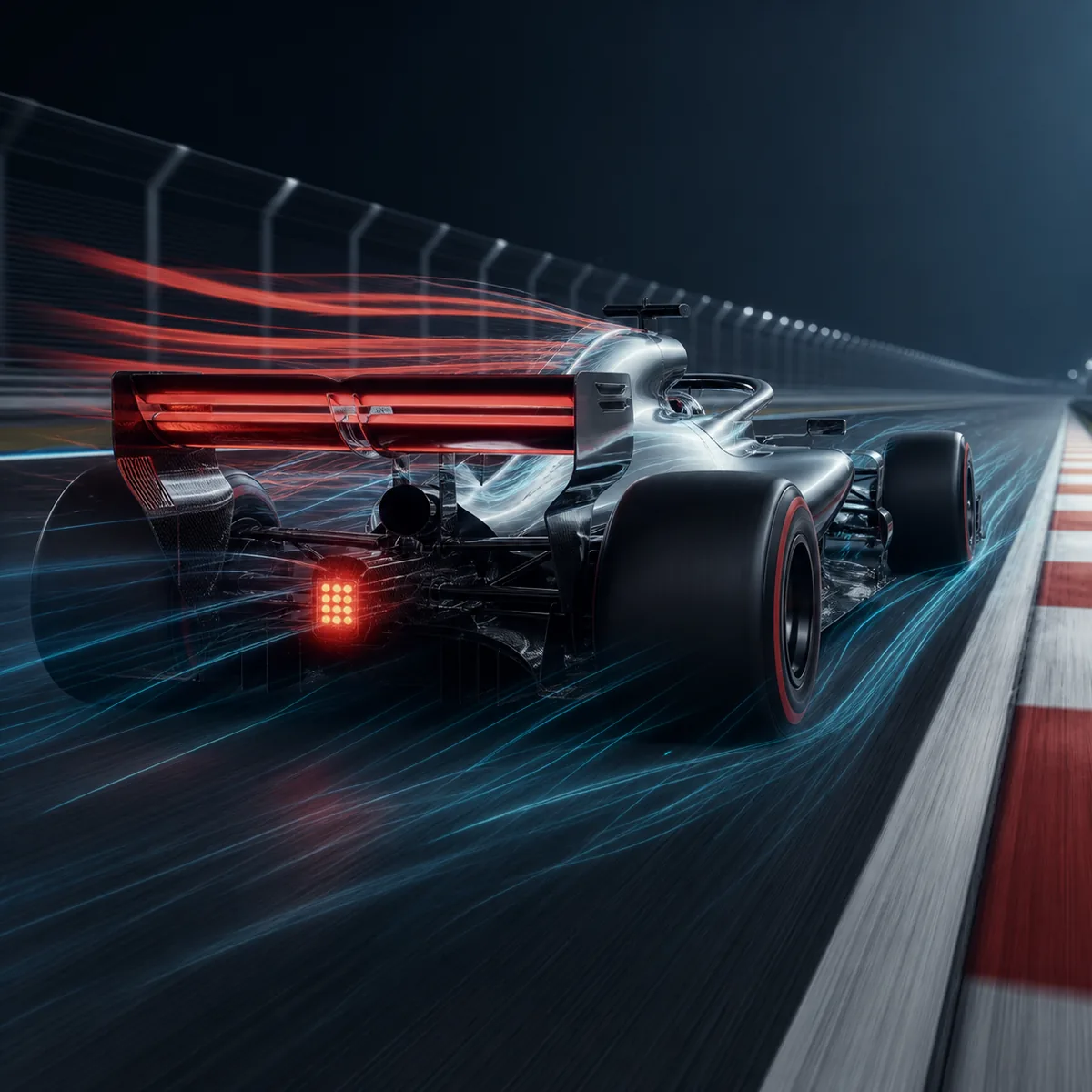
DRS stands for Drag Reduction System. It was a movable flap built into the rear wing of a Formula 1 car. When the flap opened, the wing produced less aerodynamic resistance on a straight, allowing the car to gain speed. The system was designed to make overtaking more achievable, not to give a driver a permanent power boost on every part of the lap.
The important context is that DRS is now a historical F1 term. Formula 1's official glossary describes DRS as a system used previously and says that the 2026 regulations replaced it with Active Aero and Overtake Mode. Many older videos, timing graphics and fan discussions still use the word DRS, so understanding the original system helps explain both past races and current coverage.
| Term | What it did | When fans usually hear it |
|---|---|---|
| DRS | Opened a rear-wing flap to reduce drag | Pre-2026 race footage, older explanations and historical strategy |
| Active Aero | Moves the front and rear wings between corner and straight modes | Current 2026 car and circuit coverage |
| Overtake Mode | Adds an electrical performance opportunity after a close detection | Current 2026 attack and defence strategy |
How Did the Old DRS System Work?
Under the familiar pre-2026 format, the circuit was divided into a detection point and one or more DRS activation zones. If the chasing car was within one second of the car ahead when it crossed the detection line, the driver could open the rear-wing flap in the next permitted zone. The rule linked eligibility to the gap at a specific place on the circuit rather than to a driver's general position during the whole lap.
Opening the flap flattened part of the rear wing. That reduced drag and usually increased speed along the straight, but it also reduced rear downforce. The driver therefore had to close the flap before braking or turning. The system was not a magic pass: the chasing car still needed a good exit from the previous corner, tyre grip, battery deployment, a suitable braking zone and enough speed to finish the move.
- Gap check: The driver first had to be close enough at the official detection point.
- Activation zone: The flap could open only in a marked zone, not wherever the driver wanted.
- Driver control: The driver opened and closed the system while managing braking and the next corner.
- Trade-off: More straight-line speed came with less rear-wing load while the flap was open.
What Are a DRS Detection Point and DRS Zone?
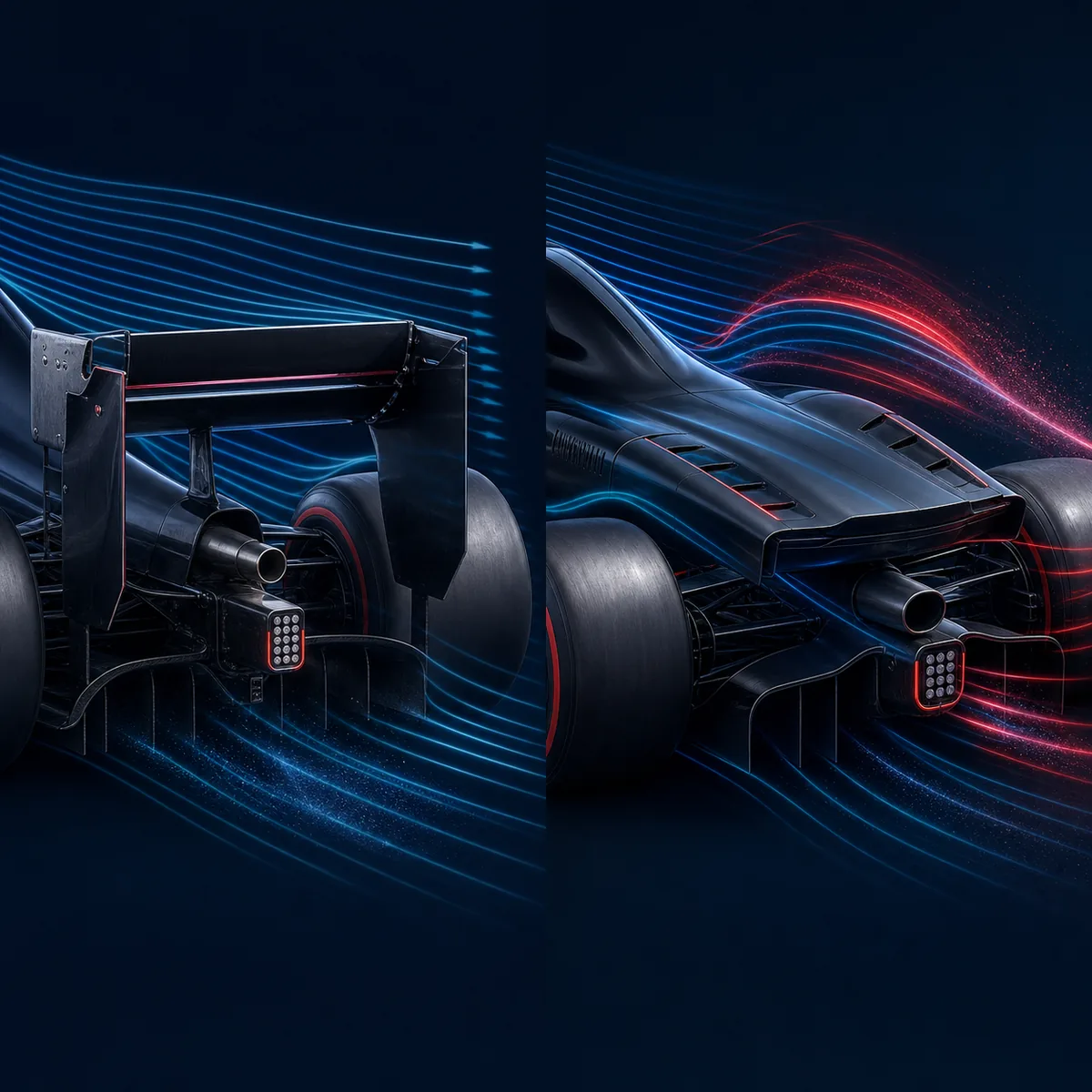
A DRS detection point was the timing location used to measure the gap between two cars. A DRS zone was the later straight where an eligible driver could open the rear-wing flap. The two locations were not always next to each other. A driver might gain the one-second advantage at the end of one corner and use it on the following straight, which is why a mistake before the detection line could decide whether DRS was available.
The exact layout depended on the circuit and the event instructions. Some tracks had multiple detection points and zones, while others had only one useful opportunity. DRS was also restricted in wet or unsafe conditions. Because the FIA and race control could adjust zones for safety or racing quality, a fan should not assume that every circuit used the same distance, gap or activation pattern.
| Part of the system | Question it answered | Why it mattered |
|---|---|---|
| Detection point | Was the chasing car within the required gap? | Decided eligibility before the straight |
| Activation line | Has the car reached the permitted part of the track? | Prevented the flap opening too early |
| Rear-wing flap | Can drag be reduced now? | Created the speed advantage on the straight |
| Braking or corner entry | When must the system close? | Restored downforce before the car needed to turn |

DRS vs Active Aero and Overtake Mode
The easiest way to understand 2026 is to separate airflow from eligibility. Active Aero performs the low-drag wing movement that many fans associate with DRS, but it is part of the car's normal operating modes. On defined straights, the front and rear wings can move to a lower-drag position; in corners they return to a higher-downforce position. The old one-second DRS permission is therefore not the rule for opening the straight-mode wings.
Overtake Mode is the new close-racing aid. If a driver is within one second of the car ahead at the relevant detection point, the attacking car can use a different electrical performance opportunity on the following lap. Formula 1's 2026 explanation describes an additional 0.5 MJ of recharge and a higher electrical power profile. That makes Overtake Mode a power-management rule, while Active Aero is the aerodynamic mode that reduces drag on the straight.
| Feature | Old DRS | 2026 system |
|---|---|---|
| Main hardware effect | Rear-wing flap opens | Front and rear wings use Active Aero modes |
| Who could use it | Eligible chasing car within the required gap | Straight Mode is available to cars in the permitted zone |
| Close-gap aid | DRS itself supplied the straight-line advantage | Overtake Mode provides an electrical attack opportunity |
| Track condition | Restricted when conditions were unsafe or wet | Current event instructions define when modes are permitted |
Why Did F1 Replace DRS in 2026?
The 2026 technical reset changed both the aerodynamics and the power-unit balance. Formula 1 wanted cars that could follow more closely while giving drivers new ways to manage electrical energy. Instead of allowing one car to open a rear-wing flap only because it was close to another car, the new package combines full-time active aerodynamic modes with a separate Overtake Mode.
That does not mean the old DRS idea became irrelevant. Reducing drag on a straight is still useful, and the basic physics remains familiar. What changed is the rule framework: Active Aero can be used by all cars in the defined straight sections, while Overtake Mode uses the one-second detection idea for an additional attack opportunity. This is why a current article should not say simply that DRS is still the 2026 rule, and should not imply that every low-drag wing movement is a DRS activation.
- Straight Mode: Wing surfaces move to reduce drag on permitted straights.
- Corner Mode: Wing surfaces return to a higher-downforce position for grip and control.
- Overtake Mode: A close attacker can access a separate electrical performance tool after detection.
- New vocabulary: Fans may hear DRS in historical discussions but Active Aero and Overtake Mode in current 2026 coverage.
How Did DRS Change F1 Race Strategy?
DRS changed how teams judged a lap. A driver could choose to stay close through a corner, use the system on the next straight and complete the pass under braking. In some situations, the car in front tried to remain just outside the eligibility gap; in others, a driver used a DRS tow to defend from a third car behind. The value of the system therefore depended on timing, tyre condition, battery use and where the next detection line appeared.
The system also created a difference between catching and passing. A car could be faster in clean air but still need several laps to reach a useful zone. Conversely, opening the flap could make the final approach too fast, causing the driver to miss the braking point. To understand those races, watch the corner exit before the detection line, the gap at the line and the position of the car when the straight ends.
| What to watch | What it can tell you |
|---|---|
| Exit before detection | A poor exit can erase the benefit before the zone begins |
| Gap at the line | The official gap—not the visual gap later—decided old DRS eligibility |
| Battery and tyres | Extra straight-line speed is less useful if traction or energy is missing |
| Braking zone | A DRS pass still required control, positioning and a legal overtake |
What Does DRS Mean for F1 Fans and Reaction Practice?
DRS is mainly a race-aerodynamics and strategy concept, not a reaction-time test. The driver does not win a DRS opportunity by clicking at the right instant; the car must be in the correct gap and location, and the driver still has to brake and turn safely. The 2026 system adds even more energy and mode management, so a clean overtaking explanation should not reduce a pass to one button press.
If you use the F1 Start Timer, it is useful for practising visual reactions to the lights-out signal. It does not reproduce slipstream, rear-wing drag, electrical deployment, tyre grip or the braking decision at the end of a straight. For the rest of the start sequence, compare it with our F1 starting lights guide and keep race-control terms such as the blue flag separate from aerodynamic aids.
- Use the right term: Say DRS for the historic system and Active Aero or Overtake Mode for the relevant 2026 mechanism.
- Read the whole lap: The key setup often happens before the straight, at the preceding corner exit and detection point.
- Keep practice realistic: A browser reaction score measures visual response, not the full performance of an F1 car.
F1 DRS FAQ
Sources and scope
The historical system and its one-second detection rule are cross-checked against Formula 1's DRS explainer and the official F1 glossary. The 2026 terminology and the replacement relationship are based on Formula 1's 2026 key-terms guide, the beginner's guide to the 2026 regulations, and the FIA Formula One regulations page.
This is an independent fan explanation, not an official Formula 1 or FIA publication. Circuit-specific activation zones, event instructions and sporting interpretations can change, so the current event documents remain the final reference for a particular Grand Prix.
Last updated: August 6, 2026