F1 Pit Lane Explained: Speed Limit, Starts and Rules
A practical guide to the fast lane, working lane, speed-limit line, pit exit, pit-lane starts and the penalties that can change a race.

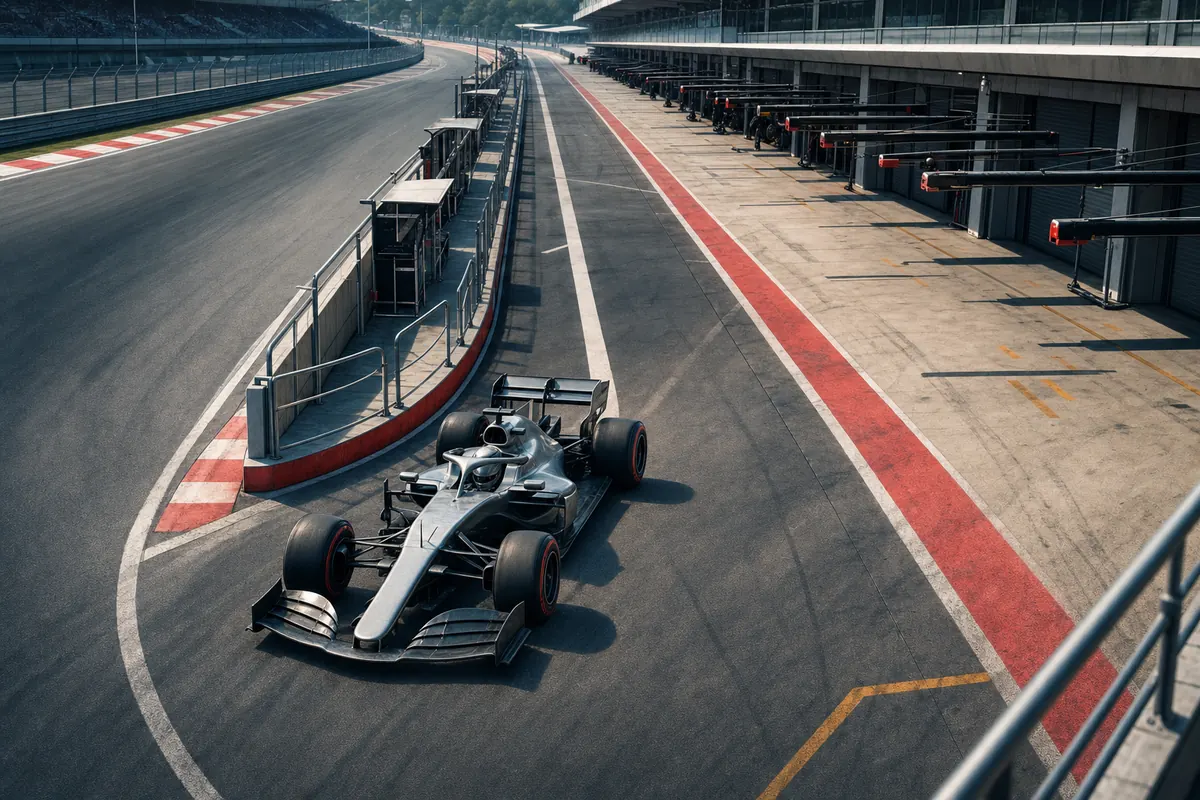
What Is the F1 Pit Lane? Layout and Key Lines
The pit lane is a controlled lane running beside the team garages. It is not one single strip of road: the outer fast lane is used by moving cars, while the inner working lane and pit boxes are where crews service cars. The pit wall separates the lane from the racing surface, and timing lines define when the speed limit begins and ends.
Drivers must follow the marked pit-entry road instead of cutting across the track. At the far end, the pit exit usually has a light and a solid line that protects cars already at racing speed. Crossing that line or joining unsafely can be investigated even if no contact occurs.
| Area | Purpose | Main risk |
|---|---|---|
| Pit entry | Deceleration route from the circuit | Crossing the entry line or slowing unpredictably |
| Fast lane | Cars travel past the garages | Speeding or blocking another car |
| Working lane / pit box | Tyres, repairs and penalties | Unsafe release into passing traffic |
| Pit exit | Acceleration and return to the track | Red light, exit-line breach or unsafe rejoin |
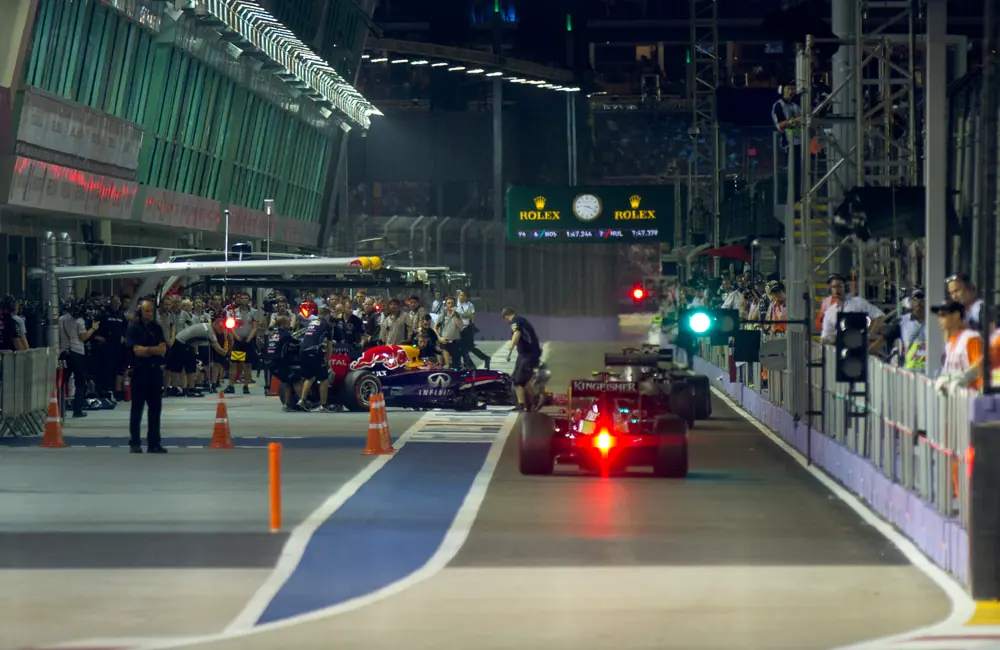
What Is the F1 Pit Lane Speed Limit in 2026?
The normal Formula 1 pit-lane speed limit is 80 km/h (49.7 mph), but the Race Director's event instructions may impose a lower limit where the lane is especially tight or safety requires it. The event documents are therefore the final reference for a particular Grand Prix.
Cars use a steering-wheel pit limiter, but the driver remains responsible for activating it early enough. FIA timing loops measure speed in the controlled zone. Braking after the line or selecting the limiter too late can still create a violation, even if the dashboard quickly settles at the target speed.
| Situation | What the driver must do | How it is checked |
|---|---|---|
| Approaching pit entry | Brake and reach the limit before the timing line | Official timing loop |
| Inside the lane | Hold the prescribed event speed | Multiple timing sectors may be used |
| After the exit line | Accelerate only when the controlled zone ends | Exit timing and track-control systems |
Pit Entry and Pit Exit Rules
On entry, a driver signals the intention to pit, moves onto the designated route and keeps clear of cars continuing on the racing line. Once inside, the car must stay in the fast lane until it turns into its own pit box. Crews may work only in the permitted area and must return equipment behind the line after the stop.
At pit exit, the driver follows the light and the painted line. A red light means the car must wait. When the exit is open, the driver may accelerate but must not cross the solid line early or force an unsafe merge. The exact geometry changes by circuit, so the exit line—not a driver's preferred racing line—controls the rejoin.
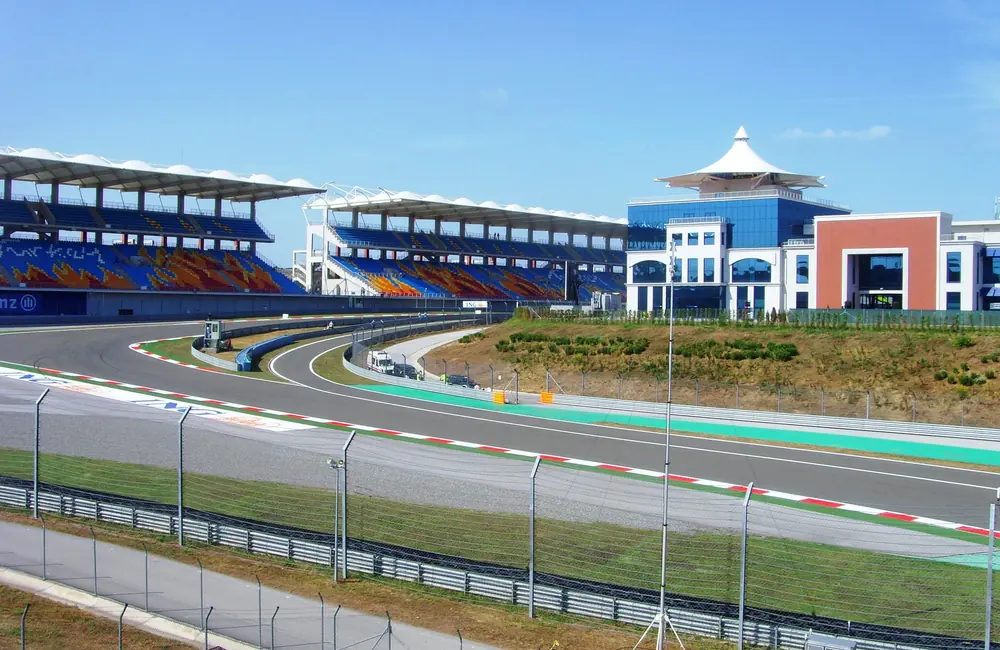
How Does an F1 Pit-Lane Start Work?
A pit-lane start means the car does not occupy its grid position for lights out. Common triggers include changes that breach parc fermé restrictions, failing to leave the pit lane in time to join the formation lap, or a required procedural penalty. The car waits at pit exit while the normal grid completes the start sequence.
Race control opens the pit exit after the field has passed the relevant point, and the car joins at the back. This is different from a normal low grid position: the driver loses the launch and usually begins several seconds behind the pack. For the sequence that creates the grid before this happens, see our F1 starting grid guide.
- Before lights out: The car is prepared in the garage or queued at pit exit.
- During the start: The driver waits; the pit-exit signal remains controlling.
- After the field passes: The exit opens and the driver joins behind the pack.
- Strategic effect: Clean air may help, but track position and tyre temperature are usually worse.
Pit-Lane Penalties: Speeding, Unsafe Release and Line Breaches
Pit-lane offences are safety-sensitive because people and cars share a narrow space. Speeding can bring a fine in practice or qualifying and a sporting penalty during the race. An unsafe release—sending a car into another car's path or into working personnel—can produce a team fine, a time penalty or further steward action depending on the danger created.
Other common investigations include crossing the pit-entry or exit line, ignoring a red exit light, blocking the fast lane and serving a time penalty incorrectly. Stewards apply the current regulations and event evidence, so similar-looking incidents do not always receive identical outcomes.
| Incident | Typical consequence | Why it matters |
|---|---|---|
| Pit-lane speeding | Fine or sporting penalty depending on session | Personnel have little escape space |
| Unsafe release | Fine and/or time or position penalty | Creates collision risk in the fast lane |
| Exit-line breach | Steward investigation and possible penalty | Protects cars merging at different speeds |
| Ignoring red light | Serious investigation | Track or session may not be safe to join |
Pit-Lane Time Is Not the Same as Pit-Stop Time
A two-second tyre change describes only the stationary service. The race-time cost also includes braking for pit entry, travelling through the speed-limited lane, stopping precisely, launching safely and accelerating from the exit. That is why television graphics may show a much larger total pit-loss figure than the stopwatch on the mechanics.
For typical stop durations, records and how to read those timing graphics, use our average F1 pit-stop time guide. The distinction also matters during a formation lap or after a start-procedure infringement, when entering the pit lane changes both track position and start procedure. For the circuit-by-circuit comparison, read our guide to the longest F1 pit lane.
F1 Pit Lane FAQ
Sources and image credits
Formula 1 pit-lane speed-limit explainer · Formula 1 pit-lane-start explainer · FIA Formula One regulations · Istanbul Park image page · Singapore pit-lane image page
Last updated: July 29, 2026