Which F1 Circuit Has the Longest Pit Lane? Interlagos Explained
The conventional answer is Interlagos, but the evidence is more nuanced: pit-lane length depends on where the measurement starts and ends, and race strategy depends even more on time loss.

What Does F1 Pit-Lane Length Actually Measure?
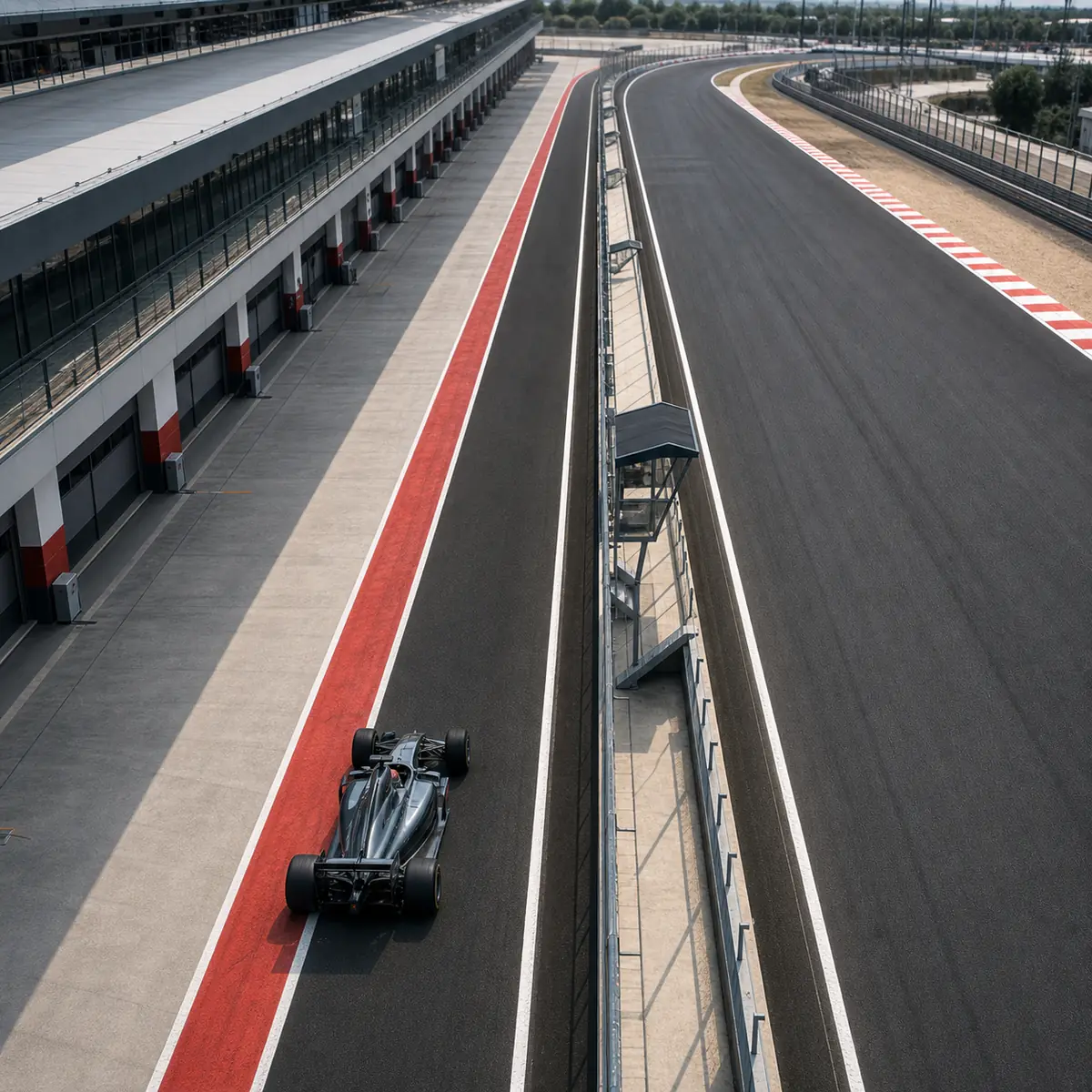
The phrase longest pit lane in F1 sounds like a simple distance question, but circuits do not always measure the same route. One source may measure from the pit-entry control line to the pit-exit line; another may include the approach, the garages, or an extended exit road that follows the circuit before merging back into racing traffic.
That distinction matters because the pit lane is a controlled road, not just the row of garages. The speed-limited section, the fast lane, the working lane, the pit box, and the exit merge can all contribute to the time a driver loses. The FIA and the event documents control the actual lines and limits for each Grand Prix.
| Measurement | What it includes | Why it can mislead |
|---|---|---|
| Pit-lane route length | A chosen distance between entry and exit reference points | The start and end points vary by source |
| Controlled-zone time | Time spent under the event pit-lane speed limit | A shorter lane can still be slow if its limit is lower |
| Total pit loss | Braking, limited-speed travel, stationary service and rejoin | Traffic and safety-car conditions change the race cost |
Why Interlagos Is Often Named as the Longest
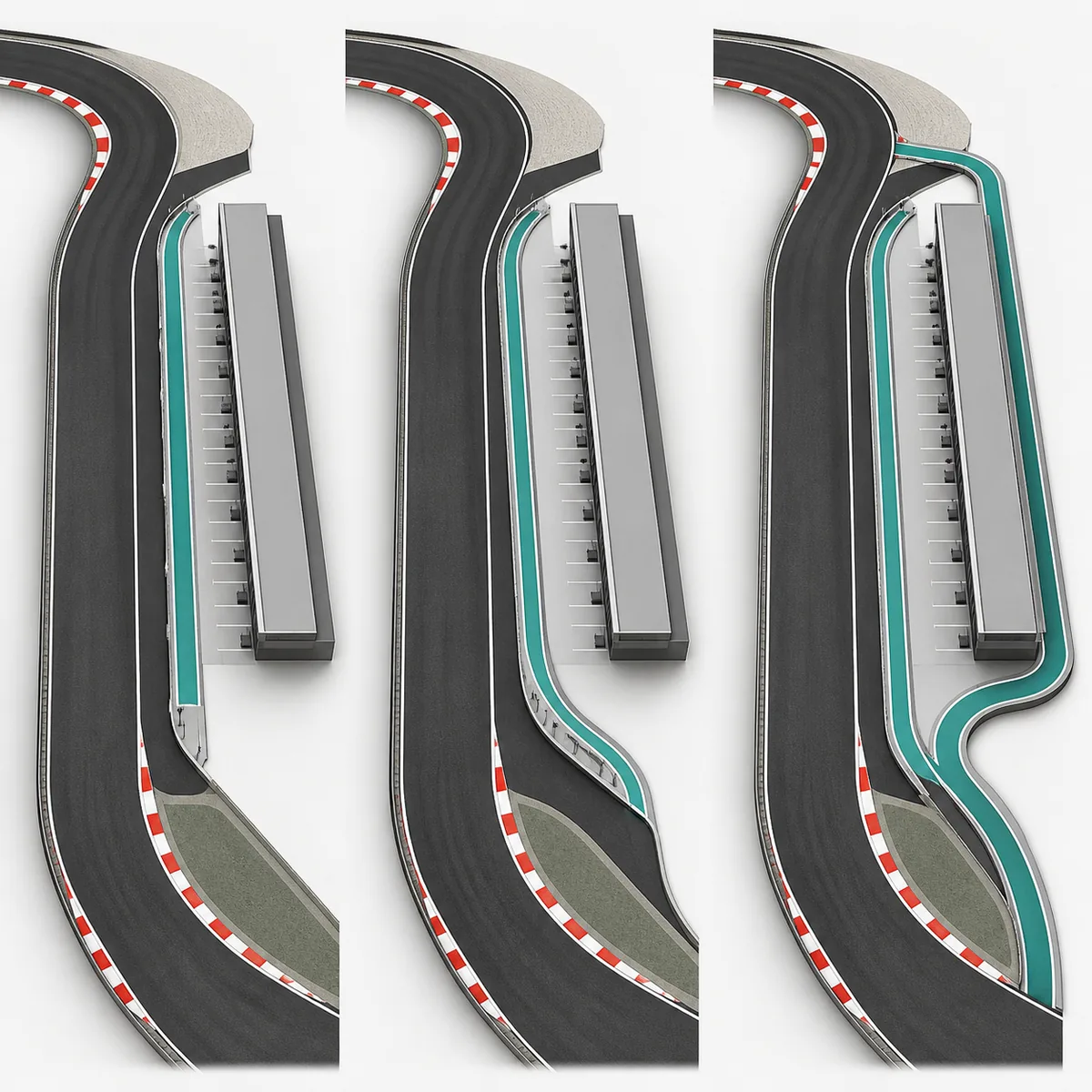
Interlagos is the name many F1 fans expect in answer to this question. Its pit exit does not simply pop out beside the final garage: the route continues around the outside of the circuit before the car rejoins the racing surface. That extended geometry makes the lane feel unusually long and can create a significant time penalty when the car is limited to pit-lane speed.
A Racecar Engineering technical description from the Interlagos era listed a 380 m pit-lane passage and a 16.4-second pit-lane time. Those figures are useful period evidence, but they are not an FIA all-circuit leaderboard and should not be mixed with newer measurements that use a different boundary.
Published Comparisons: Why There Is No Simple Winner
Available technical comparisons show why a confident all-time ranking is risky. A Bahrain technical preview listed 426 m for its pit lane, while Interlagos sources commonly cite 380 m. Those numbers come from different years and source methods, so they are best read as documented examples rather than a perfectly comparable championship table.
Singapore adds another warning: the strategic cost of its pit lane has often been discussed in seconds and speed-limit terms rather than only metres. A venue can be strategically expensive because of its controlled speed, entry braking, exit merge, or traffic even when another venue has a longer measured route.
| Circuit / example | Published or discussed figure | How to use it |
|---|---|---|
| Interlagos | 380 m and 16.4 s in a period technical source | Common answer; retain the source year and measurement boundary |
| Bahrain | 426 m in a separate technical preview | Shows that another published method can produce a longer figure |
| Singapore | Often discussed through pit-loss seconds and speed-limit effects | Useful strategy example, not a universal length ranking |
How Does Pit-Lane Length Change F1 Strategy?
A long pit lane increases the time a driver spends away from racing speed. That can make a normal tyre stop more expensive, reduce the value of an undercut, and make a safety-car or virtual-safety-car window more attractive. The team must compare the expected position after the stop with the time it gives away while travelling through the controlled lane.
The effect is not automatic. A pit lane with a lower speed limit, a difficult entry, a slow exit merge or heavy traffic may cost more than a longer lane with a clean layout. Engineers therefore work with a circuit-specific pit-loss model rather than a single worldwide distance ranking.
| Strategy factor | Effect of a long or slow pit lane |
|---|---|
| Undercut | The pitting car needs a larger pace advantage to recover the extra lane loss |
| Safety-car window | A neutralised field can reduce the relative cost of the pit-lane detour |
| Traffic | A safe release or a blocked exit can erase the benefit of a fast stationary stop |
| Pit exit | A long merge can leave the car vulnerable even after the tyres are ready |
Pit-Lane Length, Pit Loss and Pit-Stop Time Are Different
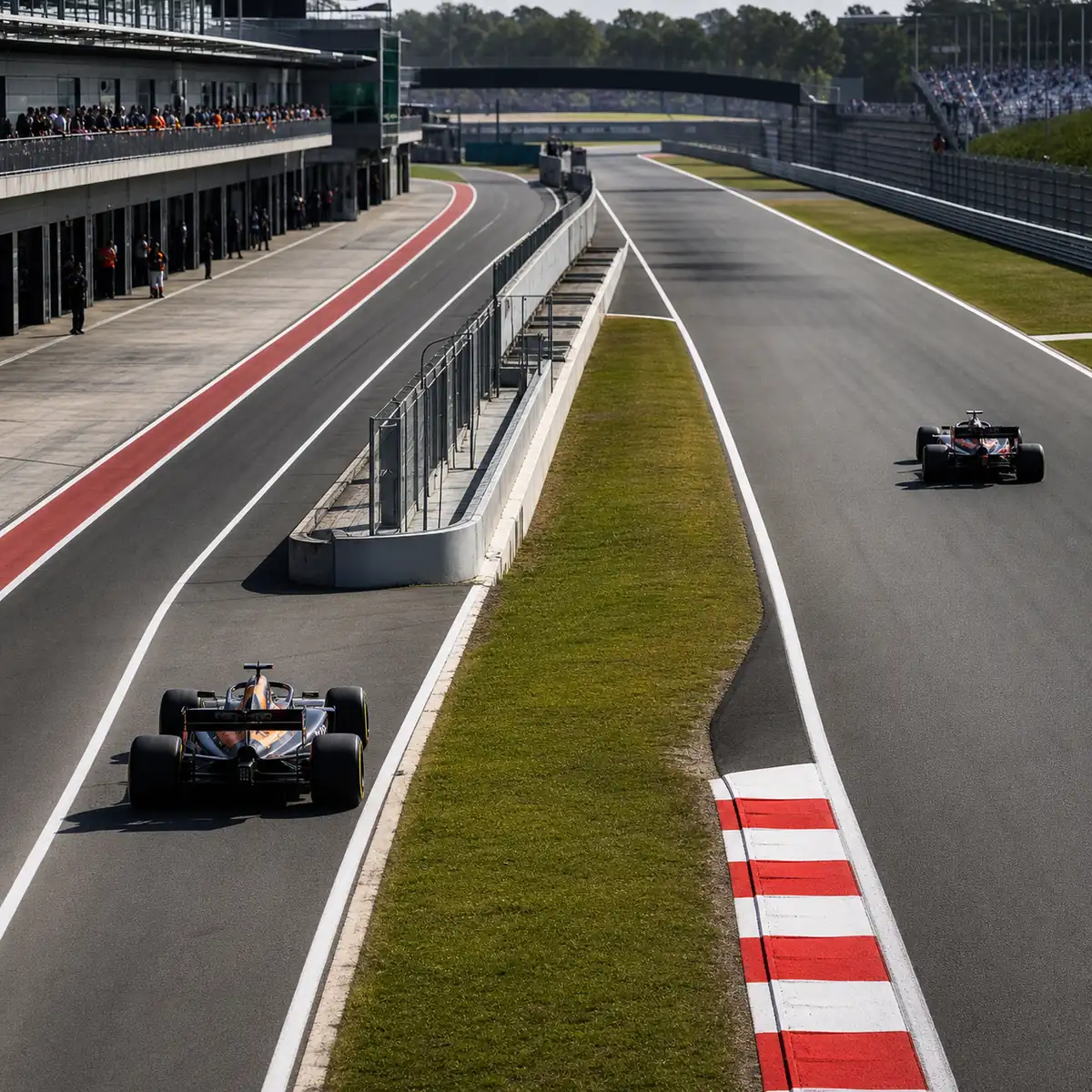
A two-second tyre change is the stationary service time. It does not describe how long the driver spends braking into the lane, travelling at the speed limit, waiting for a safe release, or accelerating back to racing speed. A long pit lane can therefore matter even when the mechanics perform a perfect stop.
For the mechanical benchmark, see our average F1 pit-stop time guide. For the rules governing the lane itself, use our F1 pit-lane rules guide. The difference is also useful when you read a timing graphic: one number describes the box, while another describes the whole race detour.
| Term | Plain-English meaning | Best comparison |
|---|---|---|
| Pit-lane length | Physical route between chosen reference points | Circuit layout and measurement method |
| Pit-lane time loss | Time surrendered to the controlled detour | Strategy, speed limit and traffic |
| Stationary pit-stop time | Time the car is stopped for service | Crew execution and car positioning |
So Which F1 Circuit Has the Longest Pit Lane?
If a quiz expects one familiar name, Interlagos is the conventional answer because its extended pit-exit route is widely described as unusually long. If the question is asking for a defensible, source-based ranking, the answer is more careful: there is no single official all-time table, and the result changes with the measurement boundary.
The most useful conclusion for fans is to treat Interlagos as a common case study, then compare pit-lane time loss and pit-exit geometry for the specific event. That explains race strategy better than claiming that one circuit is permanently first.
Longest F1 Pit Lane FAQ
Sources, scope and image credits
Rules and definitions: Formula 1 pit-lane speed-limit explainer · Formula 1 pit-lane-start explainer · FIA Formula One regulations.
Circuit comparison: period technical figures are cross-checked against Racecar Engineering coverage of Interlagos and Bahrain, with layout context from RacingCircuits.info. These are secondary technical references, so the article keeps the source year and does not present them as a single official FIA ranking.
All three visuals are AI-generated editorial illustrations made for this article. They are not official circuit maps or race photographs and are explicitly marked as not to scale.
Last updated: August 10, 2026