Parc Ferme F1 Rules Explained: What Teams Can Change
A practical guide to the lock-in period, allowed adjustments, exceptions, penalties, and the strategy decisions teams make before the Grand Prix.

What Do Parc Ferme F1 Rules Mean?
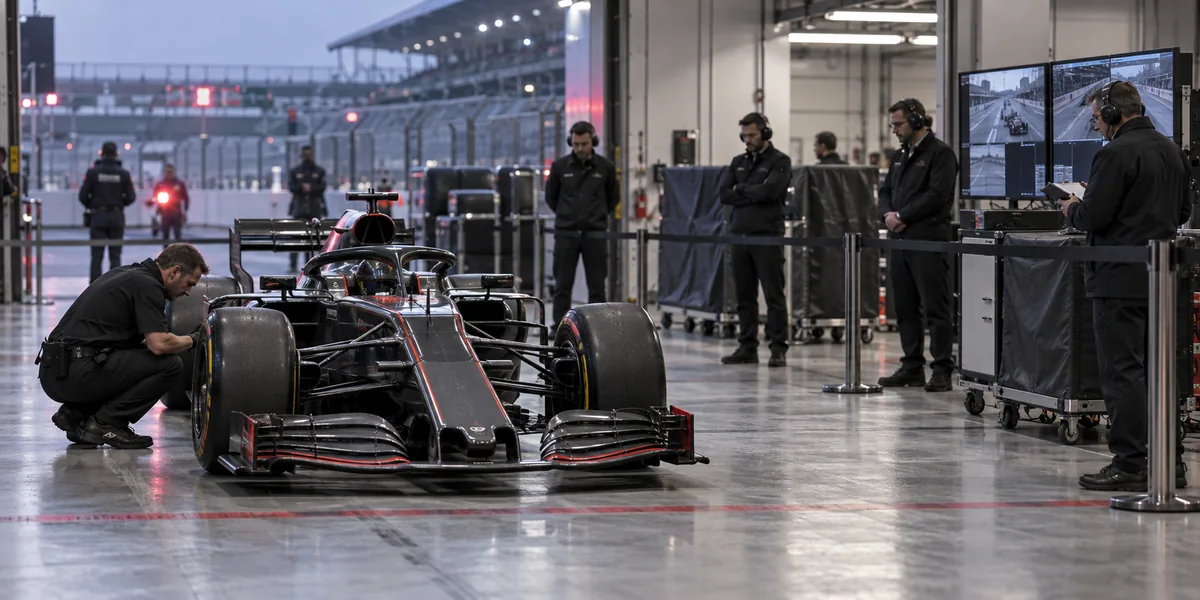
Parc ferme F1 rules use the French term “closed park.” In Formula 1 it describes a controlled period and place where cars are inspected, stored, and protected by technical and sporting rules. The purpose is to stop a team with a large budget from using the time between sessions to turn a qualifying car into a substantially different race car. The system keeps the competition tied to decisions made before the lock-in, while still allowing officials to check legality and safety.
The phrase can refer to the physical area as well as the legal condition of the car. After a session, a car may be escorted to an inspection zone, but the important point is the restriction on what the team may do next. It is different from a normal garage pause or a closed pit lane. The restriction follows the event format and the current regulations, so a sprint weekend can have more than one relevant parc ferme phase. The F1 sprint weekend guide is useful context when the schedule includes a sprint.
When Do Parc Ferme F1 Rules Start?
There is no single sentence that applies to every weekend. The sporting regulations define the relevant moment for the format: a traditional weekend, a sprint weekend, and an event with a changed qualifying order can use different triggers. In broad terms, the car becomes restricted once the specified qualifying or sprint qualifying phase has begun or finished, depending on the rule being applied. That is why commentators often say a team is “in parc ferme” without implying that every nut and bolt is untouchable.
The practical timeline is easier to follow than the legal wording. Before the lock-in, engineers can choose suspension settings, cooling openings, wing levels, and tire preparation. During the restricted window, they preserve the chosen configuration, document work, and ask officials before making an exceptional change. After the race, the car can be released for post-race checks. The F1 qualifying explainer helps identify which session created the starting order in the first place.
What Can Teams Change Under Parc Ferme F1 Rules?
A common misconception is that parc ferme means a car cannot be touched. Teams still perform defined preparation and safety work. They can service systems, make adjustments listed as permissible, and replace a damaged item when the regulations and officials allow it. The boundary is whether the work preserves the declared specification and permitted settings. A tire change, for example, is part of race procedure; changing the aerodynamic concept or fitting an unapproved suspension specification is a different matter.
The details are technical, so broadcasts usually simplify them into “setup changes” and “component changes.” A team may have to use a like-for-like replacement, report the work, and demonstrate that the replacement does not create a performance advantage beyond the allowed scope. If a change is outside the permitted list, the driver can lose the benefit of qualifying and start from the pit lane. This is why a repair story often includes a note about the stewards rather than a simple yes-or-no answer.
From Qualifying to the Race: How Parc Ferme Works
Qualifying forces a compromise. A low-downforce setup can be quick on a straight but harder on tires, while more downforce can protect race pace at the cost of one-lap speed. Engineers try to predict the weather, traffic, tire warm-up, and degradation before the restricted period removes their freedom to make a wholesale change. Once the car is accepted into parc ferme, the team carries that compromise into the race rather than quietly starting over overnight.
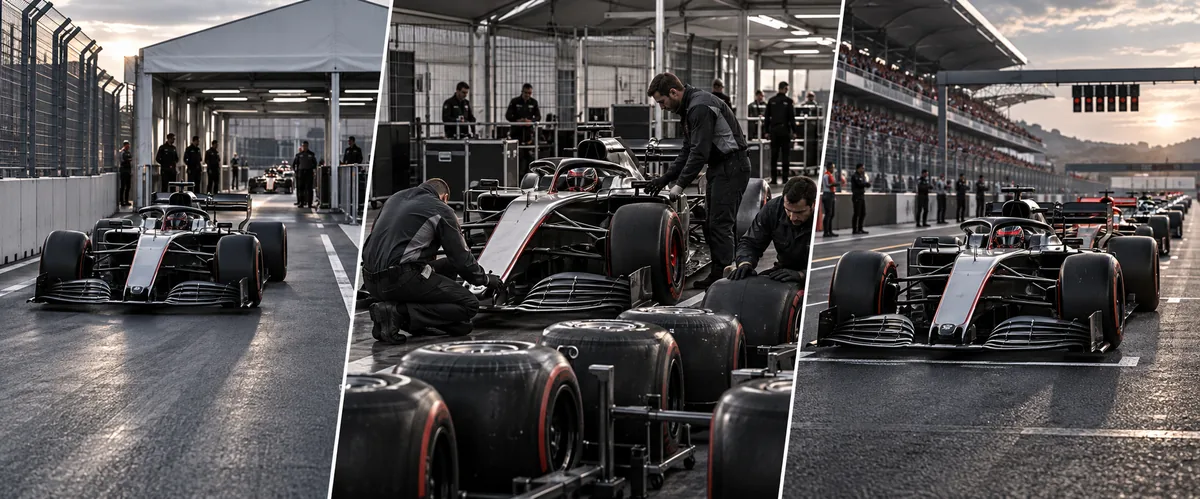
The workflow is visible if you know what to look for: the car returns from the session, officials or team personnel record its condition, covers or barriers limit access, and any unusual work is explained. If a driver crashes, a damaged component may be replaced under a defined process, but the replacement is not a blank cheque. The following illustration shows the three ideas in order: controlled entry, inspected work, and the race-ready grid.
Parc Ferme Exceptions, Repairs, and Penalties
The rules need exceptions because racing cars can be damaged, leak fluids, or become unsafe. A team can ask for approval to repair the car, and officials can compare the proposed work with the permitted procedure. The question is not only whether a part is broken; it is whether the repair is necessary, whether the replacement is equivalent, and whether the team has followed the notification process. A safety exception does not automatically permit a performance upgrade.
When a team changes a car outside the allowed scope, the sporting penalty can be more meaningful than a fine. A driver may be required to start from the pit lane, lose the qualifying result, or receive another sanction under the event regulations. Reports can sound contradictory because a car is legal after the repair but the starting position still changes. Keep the technical inspection result and the sporting penalty as two separate questions.
Why Parc Ferme Changes F1 Strategy
Parc ferme turns setup selection into a forecast. A team cannot wait for the first ten race laps to reveal whether the car is too hard on its tires and then rebuild the suspension overnight. It must use practice data, simulations, weather models, and driver feedback before the lock-in. That creates a strategic trade: a car that qualifies well may be difficult to follow or preserve tires, while a stable race setup may sacrifice a few grid places.
It also changes how viewers interpret a disappointing race. A driver who starts high but fades may be paying for a qualifying-focused compromise, traffic, or tire temperature rather than a simple lack of pace. Conversely, a lower qualifying position can be part of a long-run plan if the car is kinder to tires. Parc ferme does not choose the strategy for the team, but it makes the earlier choice harder to undo. Compare it with the site's F1 tire compound guide when a broadcast explains degradation or a planned one-stop race.
Common Parc Ferme Misunderstandings
The first mistake is treating parc ferme as one physical room with one universal start time. The legal restriction is tied to the sporting format and the phase of the event. The second is assuming that every adjustment is banned. A team can perform permitted checks and repairs; the restriction is about the scope and purpose of the work. The third is reading “the car was changed” as proof of cheating. Some changes are required to make a damaged car safe, and stewards decide whether the procedure was followed.
Another mistake is using a single technical phrase to explain every penalty. A pit-lane start can follow an unapproved change, but it can also be linked to a separate grid or component rule. Read the official decision and the event format before drawing a conclusion. For a clean overview of the starting order itself, use the F1 starting grid guide; it separates qualifying performance from later penalties.
A Simple Viewer Checklist for Parc Ferme Stories
When a commentator mentions parc ferme, start with the event format and the session that created the grid. Then ask what component or setting changed. Was it a documented repair, a permitted adjustment, or a new specification? Finally, look for the official consequence: approval, a reprimand, a grid drop, or a pit-lane start. This sequence keeps a technical explanation separate from a sporting verdict.
You can also use the timeline to understand why the team made the original choice. If the car was excellent over one lap but poor on tires, the setup may have been locked in before the race. If the weather changed, the same rules can turn a forecast error into a visible strategic disadvantage. These clues provide more useful context than saying simply that the team “could not change the car.”
F1 Parc Ferme FAQ
Rules and context
This explainer uses the general sporting meaning of parc ferme and avoids treating one event decision as a universal rule. For the exact season, format, and penalty, check the current FIA regulations and the event's published stewards' decisions. Formula 1's official site provides the session context; neither source is replaced by this fan-made summary.
Last updated: October 12, 2026