F1 Sprint Qualifying Explained: SQ1, SQ2 and SQ3
A clear guide to the short knockout session: stage times, eliminations, tyres, and the starting grid it decides.

What Does F1 Sprint Qualifying Decide?
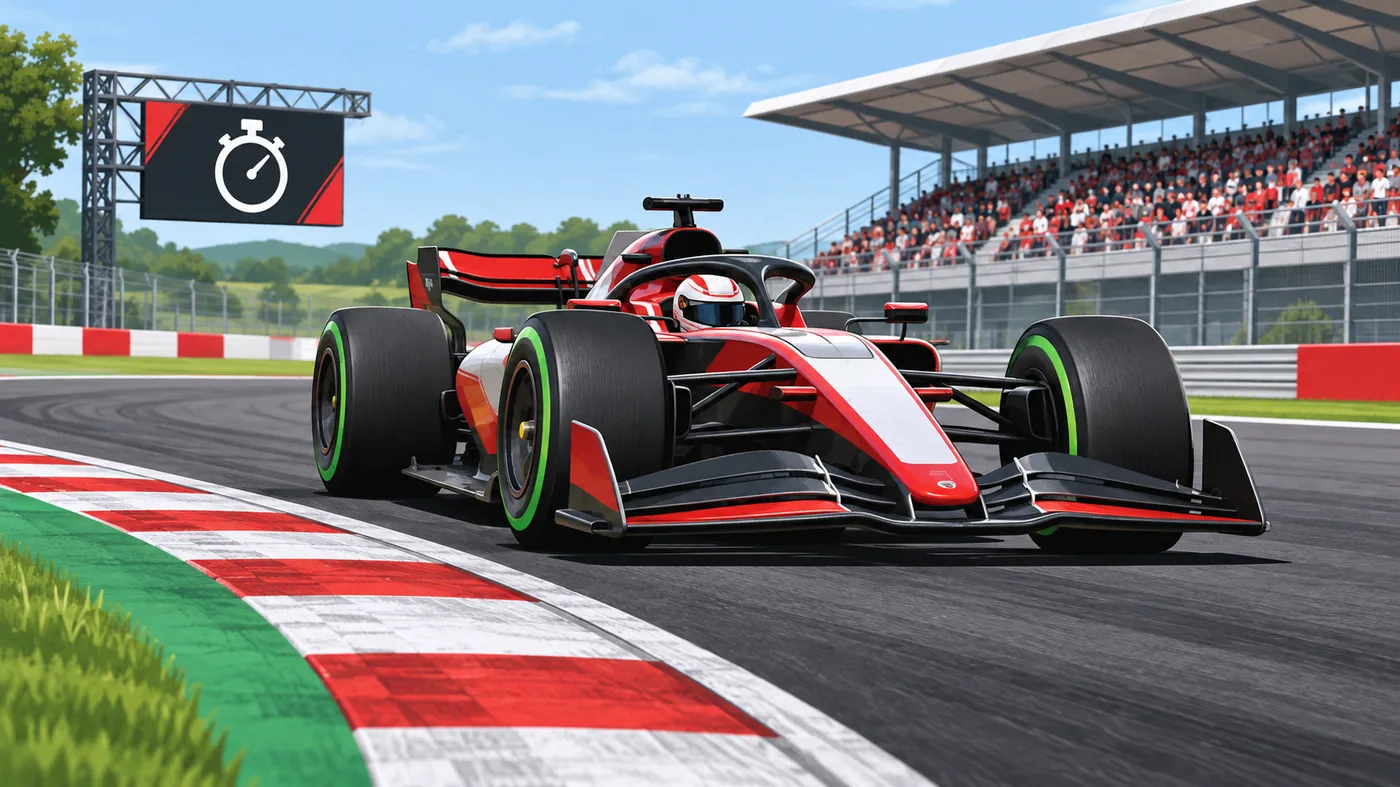
F1 Sprint Qualifying is a separate timed session on a Sprint weekend. Its job is specific: rank the eligible drivers and set the starting grid for the Sprint race. It is not a practice session, and it is not the regular qualifying session used for the Sunday Grand Prix.
The name can sound like a shortened version of normal qualifying, and the broad knockout idea is familiar. The important difference is the output. Sprint Qualifying produces Saturday's Sprint grid; Grand Prix qualifying later produces Sunday's Grand Prix grid. A fast Friday Sprint lap does not automatically place a driver at the front of the Sunday race.
- Friday session: Sprint Qualifying follows the event's first practice session on a Sprint weekend.
- Saturday result: the classification determines the Sprint starting order, subject to any applied penalties.
- Separate Sunday grid: Grand Prix qualifying is held later and decides the main race grid.
F1 Sprint Qualifying: SQ1, SQ2 and SQ3 Explained
The session is divided into three timed parts. Every eligible car begins in SQ1. The fastest group continues to SQ2, then the fastest ten in the standard 22-car field reach SQ3. Each part starts with a new clock; times from one part are not carried forward as a driver's final time in the next.
The 2026 FIA Sporting Regulations list a 12-minute SQ1, a 10-minute SQ2 and an eight-minute SQ3. There is a seven-minute interval between SQ1 and SQ2 and another seven-minute interval before SQ3. The short clocks leave little room to recover from traffic, a lap deletion or a mistake on a push lap.
| Stage | Time | Who is on track | What the result does |
|---|---|---|---|
| SQ1 | 12 minutes | All eligible cars | The slowest six in a 22-car field are eliminated; the remaining 16 continue. |
| Interval | 7 minutes | Session pause | Teams prepare for the next timed part; it is not extra qualifying time. |
| SQ2 | 10 minutes | The 16 remaining cars | The slowest six are eliminated; ten cars reach SQ3. |
| Interval | 7 minutes | Session pause | The final group prepares for the Sprint-pole shootout. |
| SQ3 | 8 minutes | The fastest ten from SQ2 | The ten Sprint grid positions at the front are decided. |
Who Advances in Sprint Qualifying?
For a standard 22-car entry, six drivers are eliminated after SQ1. Their starting positions for the Sprint come after the sixteen drivers who continue. In SQ2, six more are eliminated, leaving ten to set the first ten places in SQ3. The exact elimination count is tied to the number of eligible cars under the regulations, so it can change if the field size is different.
The ordering is easier to follow if you separate stage survival from the final result. A driver who is knocked out in SQ1 cannot improve through a later timed lap in SQ2. A driver who reaches SQ3 still needs a valid time there to fight for a front-row place; simply making the final part does not guarantee pole.
For the 22-car field, the final Sprint grid is assembled in blocks: the SQ3 classification fills positions 1 to 10, the SQ2 eliminations fill the next six and the SQ1 eliminations fill the remaining six. Stewards' decisions and grid penalties can alter the published starting order after the session.
- Make the next cut: a fast enough lap keeps the driver in the next timed segment.
- Keep a valid time: a deleted lap or a no-time result can leave a driver at risk of elimination.
- Check the classification: penalties and official decisions may change the final grid after the chequered flag.
Sprint Qualifying Tyres and Run Planning
Sprint Qualifying has a tighter tyre allocation than a normal Grand Prix qualifying session. Under the cited 2026 sporting regulations, a driver may use up to one new set of Medium tyres in SQ1 and up to one new Medium set in SQ2. SQ3 uses up to one set of Soft tyres. The regulation wording matters: it is a limit and compound requirement, not a promise that every driver will complete the same number of laps.
A short clock changes how teams plan a run. They must leave enough time to reach the line, build tyre and brake temperature, find a gap in traffic and complete a timed lap before the session ends. A driver can have pace but still miss the cut after a yellow flag, a deleted lap or a queue at pit exit.
That makes Sprint Qualifying less forgiving than a long session with multiple chances. A team may weigh an early safe lap against waiting for a better track condition. The best choice depends on traffic, grip, weather and the remaining clock; there is no single run plan that works at every circuit.
- SQ1 and SQ2: the cited rule specifies a new Medium set for each part.
- SQ3: the cited rule specifies a Soft set for the final ten-car part.
- Track position: a clean gap matters because each stage is short and a traffic delay consumes a meaningful share of the clock.
Sprint Qualifying vs Grand Prix Qualifying
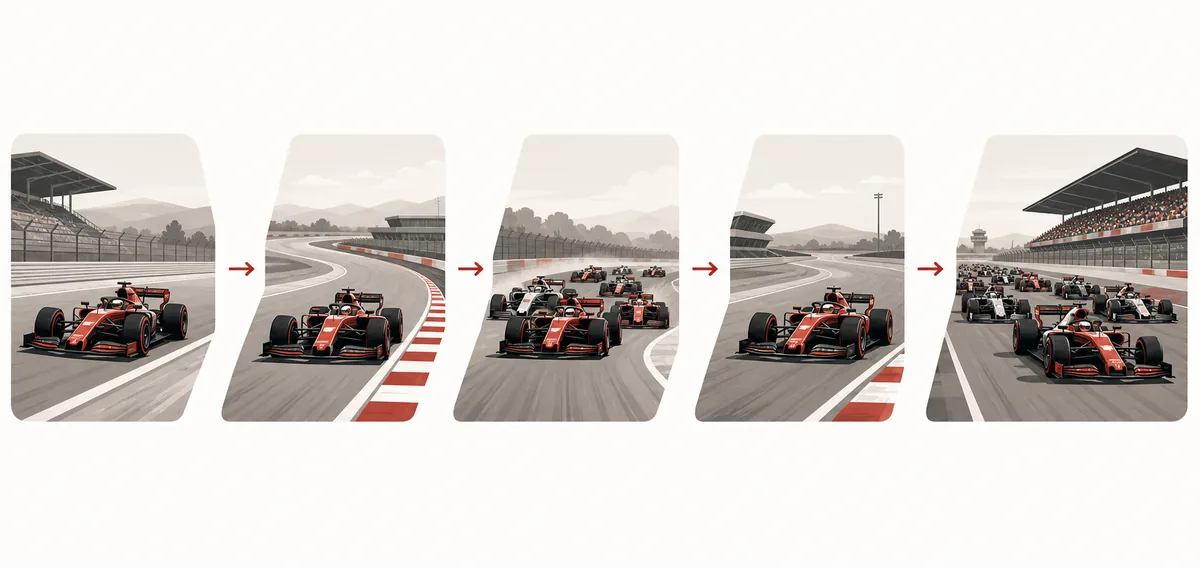
Both sessions use timed laps and knockout stages, but they are separate competitions with separate grids. Sprint Qualifying is shorter and sets the Saturday Sprint order. Grand Prix qualifying is the session later in the weekend that sets the Sunday Grand Prix order.
For a wider explanation of the normal Q1, Q2 and Q3 process, see our F1 qualifying guide. For the race that Sprint Qualifying feeds into, see how the F1 Sprint race works. Keeping those tasks separate prevents a common viewing mistake: treating the Sprint finishing order or Sprint grid as the Grand Prix grid.
| Question | Sprint Qualifying | Grand Prix qualifying |
|---|---|---|
| What is being set? | The Sprint starting grid | The Sunday Grand Prix starting grid |
| When is it held? | Friday on a Sprint weekend | Later in the weekend, usually Saturday |
| How long are the 2026 stages? | 12, 10 and 8 minutes | The regular qualifying format has its own longer Q1/Q2/Q3 clocks |
| Does one result replace the other? | No; it applies to the Sprint | No; it applies to the Grand Prix |
A Simple Example of Reading the Session
Imagine a 22-car Sprint field. All 22 start SQ1. Once the 12-minute clock ends, the six slowest are out and sixteen advance. After the seven-minute interval, those sixteen race the SQ2 clock; its six slowest are out and ten continue.
In SQ3, the remaining ten compete for the first ten Sprint grid positions. If a driver sets the fastest valid lap, that driver is provisionally first for the Sprint. A later penalty can move the car, so the provisional classification and the final grid are not always identical.
When watching, keep three questions in mind: how much time remains, which cars are near the elimination line, and whether the current lap is valid. This helps explain why a driver may push again after a strong lap: another car can improve, the track can gain grip, or a deleted time can change the cutoff.
- Before SQ1 ends: look at the bottom six in the timing order.
- During SQ2: watch the cutoff move as the remaining sixteen complete laps.
- In SQ3: compare the top ten's valid times; the fastest sets Sprint pole before penalties.
- After the session: check the official classification and any steward decisions for the final Sprint grid.
Penalties, Weather and Limits of the Format
The stage table describes the scheduled format, not every possible session outcome. A red flag, wet conditions, a delayed start or a change to the event timetable can affect how a session runs. Sporting officials apply the regulations and publish the classification for that event; a general explainer cannot predict a one-off decision.
A Sprint Qualifying result is also not a guarantee of where a car will start. Grid penalties, deleted lap times, a non-classified driver or a later ruling can change the order. Use the official FIA regulations and event documents when a specific weekend detail matters.
The numbers on this page are drawn from the 2026 FIA Formula 1 Sporting Regulations, Section B, Issue 05, dated February 27, 2026. Regulations can be amended. If you are following a later season or a changed event format, verify the current FIA document and the Grand Prix schedule before relying on a tyre rule or session time.
F1 Sprint Qualifying FAQ
Sources and Scope
The stage durations, intervals, tyre requirements and grid-order outline are based on the 2026 FIA Formula 1 Sporting Regulations, Section B, Issue 05. Read the current event documents for later amendments or a specific steward decision.
The weekend order is cross-checked against Formula 1's official Sprint guide. This independent fan resource explains the format and is not affiliated with Formula 1, the FIA, or any team.
Last updated: November 4, 2026